
AAU universities conduct a majority of the federally funded university research that contributes to our economic competitiveness, health and well-being, and national security. AAU universities are growing our economy through invention and innovation while preparing the next generation of scientists and engineers for global leadership. By moving research into the marketplace AAU universities are helping to create jobs, and provide society with new medicines and technologies.

A study by researchers at Duke University School of Medicine found that supplying healthy mitochrondra to damaged nerve cells can signifantly help millions managing pain from diabetic neuropathy and chemotherapy.

Researchers from the USF College of Marine Science are studying soft tissue samples from barnacles, oysters, and fish to better understand the state of contamination and its origins in Tampa Bay, Florida's largest estuary.
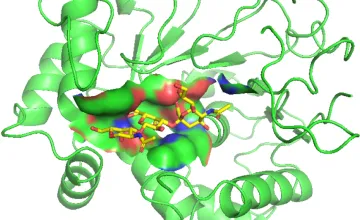
The advancement lays the groundwork for creating a library of sugar-recognizing proteins that may help detect and treat diverse illnesses.
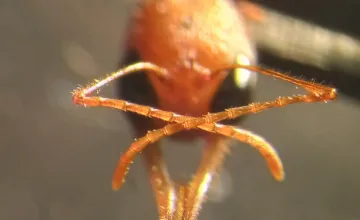
The olfactory senses of ants help them hunt, detect outsiders, and know their role within a colony. In a new study, researchers have discovered how ants can switch one gene on out of hundreds to ensure their survival.
Explore More: University Research
You can filter stories by the university.
Yale researchers have discovered that higher levels of cannabinoid receptor 1 (CB1) availability in the amygdala, a brain region associated with emotional processing, are linked to reduced pain responses and increased emotional numbing in individuals with post-traumatic stress disorder (PTSD).
In the midst of America’s growing opioid crisis, a much healthier alternative to long-term pain management is emerging — one affectionately known as “the cuddle hormone,” or oxytocin.
A decade after the establishment of the certified community behavioral health clinic (CCBHC) model, more than 60 percent of the US population has access to such facilities and the mental health and substance use disorder treatment services they provide, according to a new study.
Research from the University of Kansas analyzed how the population is discussing HIV on X, formerly Twitter, arguing that understanding how the population is discussing the topic can help design more effective health campaigns to reach them.
Cornell University | Northwestern University | The Johns Hopkins University | The University of Kansas | University of Pennsylvania | University of Southern California | University Research
A team of ecologists from Brown University, in collaboration with National Park Service scientists, conducted a two-year study to understand how herbivores in Yellowstone National Park manage to find enough food throughout the year, especially during the harsh winter months.