
AAU universities conduct a majority of the federally funded university research that contributes to our economic competitiveness, health and well-being, and national security. AAU universities are growing our economy through invention and innovation while preparing the next generation of scientists and engineers for global leadership. By moving research into the marketplace AAU universities are helping to create jobs, and provide society with new medicines and technologies.
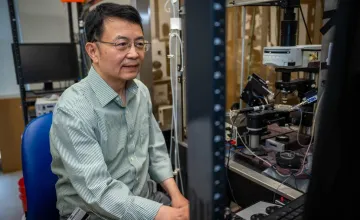
A study by researchers at Duke University School of Medicine found that supplying healthy mitochrondra to damaged nerve cells can signifantly help millions managing pain from diabetic neuropathy and chemotherapy.

Researchers from the USF College of Marine Science are studying soft tissue samples from barnacles, oysters, and fish to better understand the state of contamination and its origins in Tampa Bay, Florida's largest estuary.
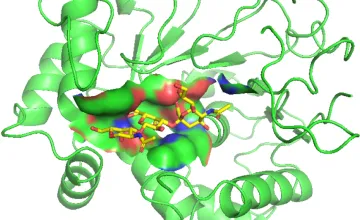
The advancement lays the groundwork for creating a library of sugar-recognizing proteins that may help detect and treat diverse illnesses.

The olfactory senses of ants help them hunt, detect outsiders, and know their role within a colony. In a new study, researchers have discovered how ants can switch one gene on out of hundreds to ensure their survival.
Explore More: University Research
You can filter stories by the university.
Investors are capitalizing on a loophole in U.S. tax laws that has led to billions of dollars of lost tax revenue, according to new research from the University at Buffalo School of Management.
Customers who observe misbehavior in countries with strict societal norms respond better to an apology, while customers who observe misbehavior in nations with looser norms respond better to appreciations of their patience, according to a new study from Penn State.
A new chemical process developed by researchers at UC Berkeley can essentially vaporize plastics that dominate the waste stream today and turn them into hydrocarbon building blocks for new plastics.
A new study highlights the dual role of microglia in both contributing to and protecting against the development of Alzheimer's disease.
Indiana University School of Medicine researchers have made a significant breakthrough in developing a new gene therapy approach that restores full-length dystrophin protein, which could lead to new treatments for people with Duchenne muscular dystrophy (DMD).