
AAU universities conduct a majority of the federally funded university research that contributes to our economic competitiveness, health and well-being, and national security. AAU universities are growing our economy through invention and innovation while preparing the next generation of scientists and engineers for global leadership. By moving research into the marketplace AAU universities are helping to create jobs, and provide society with new medicines and technologies.
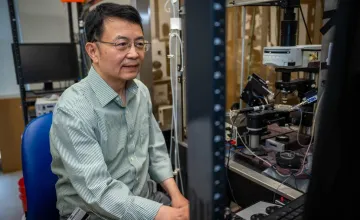
A study by researchers at Duke University School of Medicine found that supplying healthy mitochrondra to damaged nerve cells can signifantly help millions managing pain from diabetic neuropathy and chemotherapy.

Researchers from the USF College of Marine Science are studying soft tissue samples from barnacles, oysters, and fish to better understand the state of contamination and its origins in Tampa Bay, Florida's largest estuary.
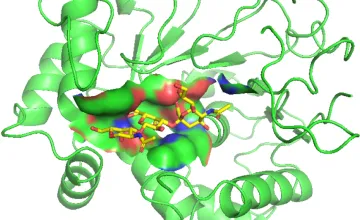
The advancement lays the groundwork for creating a library of sugar-recognizing proteins that may help detect and treat diverse illnesses.
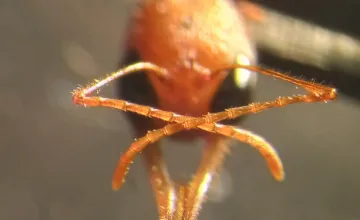
The olfactory senses of ants help them hunt, detect outsiders, and know their role within a colony. In a new study, researchers have discovered how ants can switch one gene on out of hundreds to ensure their survival.
Explore More: University Research
You can filter stories by the university.
The reason some people find it so hard to resist finishing an entire bag of chips or bowl of candy may lie with how their brain responds to food rewards, leaving them more vulnerable to overeating.
USC researchers aim to create a navigation tool for oncology teams to select the best treatment options for patients based on the genetic characteristics of their cancer and their own health profile.
A new combination of materials developed by Stanford researchers may aid in developing a rechargeable battery able to store the large amounts of renewable power created through wind or solar sources.
Stanford University | Energy Storage/Distribution | Research to Secure Our Energy Future | University Research
Stanford researchers have found that a thin membrane, thought to be just a shrink wrap around some bacterial cell walls, has structural properties critical for survival. The finding may boost efforts to fight antibiotic resistance.
Assistant Professor Goeran Fiedler is researching the comparative effectiveness of a new type of liner that fits into the prosthetic socket of artificial limbs for individuals with below-knee amputations.