
AAU universities conduct a majority of the federally funded university research that contributes to our economic competitiveness, health and well-being, and national security. AAU universities are growing our economy through invention and innovation while preparing the next generation of scientists and engineers for global leadership. By moving research into the marketplace AAU universities are helping to create jobs, and provide society with new medicines and technologies.
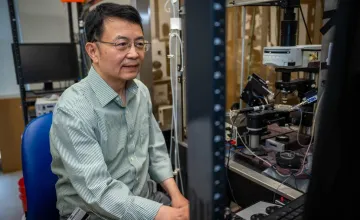
A study by researchers at Duke University School of Medicine found that supplying healthy mitochrondra to damaged nerve cells can signifantly help millions managing pain from diabetic neuropathy and chemotherapy.

Researchers from the USF College of Marine Science are studying soft tissue samples from barnacles, oysters, and fish to better understand the state of contamination and its origins in Tampa Bay, Florida's largest estuary.
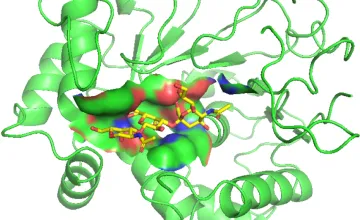
The advancement lays the groundwork for creating a library of sugar-recognizing proteins that may help detect and treat diverse illnesses.

The olfactory senses of ants help them hunt, detect outsiders, and know their role within a colony. In a new study, researchers have discovered how ants can switch one gene on out of hundreds to ensure their survival.
Explore More: University Research
You can filter stories by the university.
Individuals with weaker muscles do not typically live as long as their stronger peers, according to new research from the University of Michigan.
Rice University nanoscientists have demonstrated a method for loading iron inside nanoparticles to create MRI contrast agents that outperform gadolinium chelates, the mainstay contrast agent that is facing increased scrutiny due to potential safety concerns.
Best known as a pathogen that causes food poisoning or steals nutrients away from its host, the E. coli bacterium actually plays a critical role in promoting health by producing a compound that helps cells take up iron, new CU Boulder research shows.
To stave off a concussion, your head’s position is more important than whether you are tensing your neck, according to new research.
The gene editing technology CRISPR has prompted both breathless predictions of medical breakthroughs and warnings of the apocalypse. Dr. Greg Licholai, a biotech entrepreneur and a lecturer at Yale explains CRISPR’s potential and dangers.