
AAU universities conduct a majority of the federally funded university research that contributes to our economic competitiveness, health and well-being, and national security. AAU universities are growing our economy through invention and innovation while preparing the next generation of scientists and engineers for global leadership. By moving research into the marketplace AAU universities are helping to create jobs, and provide society with new medicines and technologies.
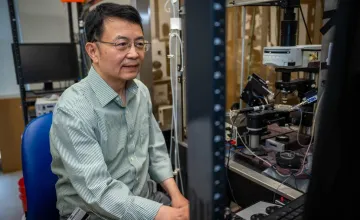
A study by researchers at Duke University School of Medicine found that supplying healthy mitochrondra to damaged nerve cells can signifantly help millions managing pain from diabetic neuropathy and chemotherapy.

Researchers from the USF College of Marine Science are studying soft tissue samples from barnacles, oysters, and fish to better understand the state of contamination and its origins in Tampa Bay, Florida's largest estuary.
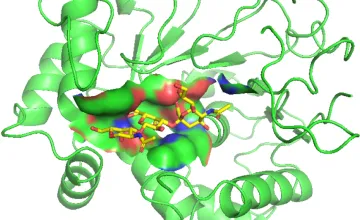
The advancement lays the groundwork for creating a library of sugar-recognizing proteins that may help detect and treat diverse illnesses.

The olfactory senses of ants help them hunt, detect outsiders, and know their role within a colony. In a new study, researchers have discovered how ants can switch one gene on out of hundreds to ensure their survival.
Explore More: University Research
You can filter stories by the university.
A new computational model could potentially boost efficiencies and profits in natural gas production by better predicting previously hidden fracture mechanics while accurately accounting for the known amounts of gas released during the process.
Researchers have applied an unconventional approach involving bacteria to discover human proteins that can lead to DNA damage and promote cancer. This could lead to new tests to identify people who are likely to develop cancer.
New research from Michigan State University shows a connection between social media use and impaired risky decision-making, which is commonly deficient in substance addiction.
There may be variations, based on sex, in the way that pain is remembered in both mice and humans, new research suggests.
More than half of people who take medical cannabis for chronic pain say they’ve driven under the influence of cannabis within two hours of using it, at least once in the last six months, according to a new study.