
AAU universities conduct a majority of the federally funded university research that contributes to our economic competitiveness, health and well-being, and national security. AAU universities are growing our economy through invention and innovation while preparing the next generation of scientists and engineers for global leadership. By moving research into the marketplace AAU universities are helping to create jobs, and provide society with new medicines and technologies.
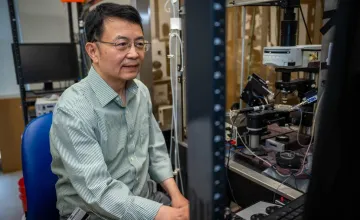
A study by researchers at Duke University School of Medicine found that supplying healthy mitochrondra to damaged nerve cells can signifantly help millions managing pain from diabetic neuropathy and chemotherapy.

Researchers from the USF College of Marine Science are studying soft tissue samples from barnacles, oysters, and fish to better understand the state of contamination and its origins in Tampa Bay, Florida's largest estuary.

The advancement lays the groundwork for creating a library of sugar-recognizing proteins that may help detect and treat diverse illnesses.

The olfactory senses of ants help them hunt, detect outsiders, and know their role within a colony. In a new study, researchers have discovered how ants can switch one gene on out of hundreds to ensure their survival.
Explore More: University Research
You can filter stories by the university.
In a new study of breast cancer patients who had breast reconstruction, researchers examine complications across the different types of surgeries.
Stony Brook University is the first higher education institution in the United States to launch a Freight Farm on a college campus. The technology offers a hands-on learning environment that prompts students to be more sustainable in their own lives.
Researchers have created 'electronic skin' that will enable amputees to perceive through prosthetic fingertips.
Wildfires can contaminate nearby streams and watersheds through mobilization of sediments, nutrients and dissolved organic matter, straining the capabilities of downstream municipal treatment facilities, a new report co-authored by CU Boulder researchers shows.
Researchers at the Georgia Institute of Technology have found new evidence suggesting that batteries based on sodium and potassium hold promise as a potential alternative to lithium-based batteries.
Georgia Institute of Technology | Energy Storage/Distribution | Research to Secure Our Energy Future | University Research