
AAU universities conduct a majority of the federally funded university research that contributes to our economic competitiveness, health and well-being, and national security. AAU universities are growing our economy through invention and innovation while preparing the next generation of scientists and engineers for global leadership. By moving research into the marketplace AAU universities are helping to create jobs, and provide society with new medicines and technologies.
A study by researchers at Duke University School of Medicine found that supplying healthy mitochrondra to damaged nerve cells can signifantly help millions managing pain from diabetic neuropathy and chemotherapy.

Researchers from the USF College of Marine Science are studying soft tissue samples from barnacles, oysters, and fish to better understand the state of contamination and its origins in Tampa Bay, Florida's largest estuary.
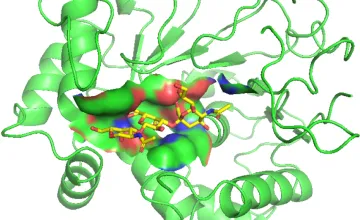
The advancement lays the groundwork for creating a library of sugar-recognizing proteins that may help detect and treat diverse illnesses.
The olfactory senses of ants help them hunt, detect outsiders, and know their role within a colony. In a new study, researchers have discovered how ants can switch one gene on out of hundreds to ensure their survival.
Explore More: University Research
You can filter stories by the university.
Biomedical engineer explores new use for synthetic platelets to treat inherited bleeding disorders.
Meghan Meyer, who joined Columbia this year, is studying the brain mechanisms that allow us to understand our social world.
A new study found that climate change will expose species to temperatures above those they have experienced over the past 150 years and may drastically reduce their available habitat.
New research from Yale uses quantum chemistry to uncover how the retina protects against age-related macular degeneration.
Tulane University researchers have discovered a possible genetic cause for double-jointedness and a range of associated connective tissue disorders.