
AAU universities conduct a majority of the federally funded university research that contributes to our economic competitiveness, health and well-being, and national security. AAU universities are growing our economy through invention and innovation while preparing the next generation of scientists and engineers for global leadership. By moving research into the marketplace AAU universities are helping to create jobs, and provide society with new medicines and technologies.
A study by researchers at Duke University School of Medicine found that supplying healthy mitochrondra to damaged nerve cells can signifantly help millions managing pain from diabetic neuropathy and chemotherapy.

Researchers from the USF College of Marine Science are studying soft tissue samples from barnacles, oysters, and fish to better understand the state of contamination and its origins in Tampa Bay, Florida's largest estuary.
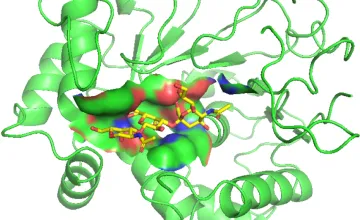
The advancement lays the groundwork for creating a library of sugar-recognizing proteins that may help detect and treat diverse illnesses.
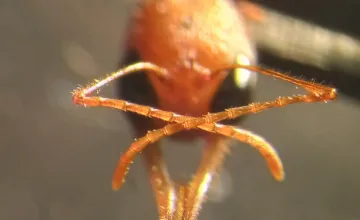
The olfactory senses of ants help them hunt, detect outsiders, and know their role within a colony. In a new study, researchers have discovered how ants can switch one gene on out of hundreds to ensure their survival.
Explore More: University Research
You can filter stories by the university.
Michigan State University scientists are testing a promising drug that may stop a gene associated with obesity from triggering breast and lung cancer, as well as prevent these cancers from growing.
Pitt researchers say that while doctors and patients has long believed that the window of opportunity for regaining most cognitive abilities closes three months after a stroke, their study suggests otherwise.
To help advance online learning, MSU researchers are using robots to help distance learners feel more connected in their classes.
Researchers are developing drug delivery patches that would be worn on the skin, like a bandage, to deliver non-addictive pain medicine for chronic lower-back pain and post-surgery pain.
University of Virginia | AAU Universities Battle the Opioid Crisis | Treatment & Prevention | University Research
MIT researchers are developing a third-generation robotic Cheetah will initially act as a spectral inspection robot in hazardous environments such as a compromised nuclear plant or chemical factory. It will then evolve to serve other emergency response needs.