
AAU universities conduct a majority of the federally funded university research that contributes to our economic competitiveness, health and well-being, and national security. AAU universities are growing our economy through invention and innovation while preparing the next generation of scientists and engineers for global leadership. By moving research into the marketplace AAU universities are helping to create jobs, and provide society with new medicines and technologies.
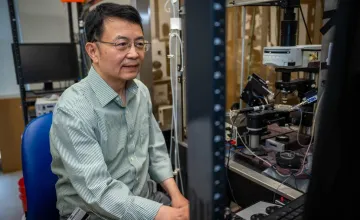
A study by researchers at Duke University School of Medicine found that supplying healthy mitochrondra to damaged nerve cells can signifantly help millions managing pain from diabetic neuropathy and chemotherapy.

Researchers from the USF College of Marine Science are studying soft tissue samples from barnacles, oysters, and fish to better understand the state of contamination and its origins in Tampa Bay, Florida's largest estuary.
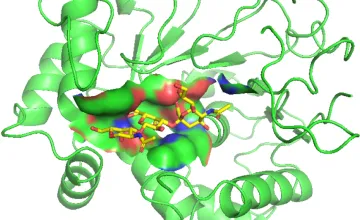
The advancement lays the groundwork for creating a library of sugar-recognizing proteins that may help detect and treat diverse illnesses.

The olfactory senses of ants help them hunt, detect outsiders, and know their role within a colony. In a new study, researchers have discovered how ants can switch one gene on out of hundreds to ensure their survival.
Explore More: University Research
You can filter stories by the university.
Research from University at Buffalo and University of Utah generates knowledge on GenX chemicals, which the EPA recently deemed more toxic than the ‘forever chemicals’ they were developed to replace
The University of Utah | University at Buffalo - The State University of New York | University Research
A company founded by University at Buffalo researchers is looking to employ artificial intelligence (AI) to improve treatment of vascular lesions in the brain, starting with intracranial aneurysms.
A University at Buffalo communication researcher has developed a framework for measuring the slippery concept of social media public opinion.
Using a simulation modeling approach, Brown researchers estimate that closing syringe services programs, even for one year, will cause cases of HIV to rise.
University of Washington researchers have shown that a dental tool they created can measure the acidity built up by the bacteria in plaque that leads to cavities.