
AAU universities conduct a majority of the federally funded university research that contributes to our economic competitiveness, health and well-being, and national security. AAU universities are growing our economy through invention and innovation while preparing the next generation of scientists and engineers for global leadership. By moving research into the marketplace AAU universities are helping to create jobs, and provide society with new medicines and technologies.
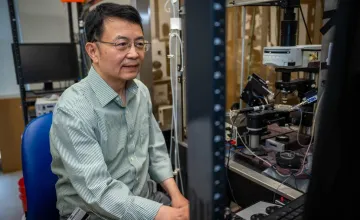
A study by researchers at Duke University School of Medicine found that supplying healthy mitochrondra to damaged nerve cells can signifantly help millions managing pain from diabetic neuropathy and chemotherapy.

Researchers from the USF College of Marine Science are studying soft tissue samples from barnacles, oysters, and fish to better understand the state of contamination and its origins in Tampa Bay, Florida's largest estuary.
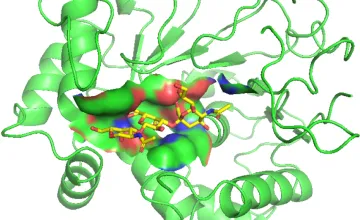
The advancement lays the groundwork for creating a library of sugar-recognizing proteins that may help detect and treat diverse illnesses.
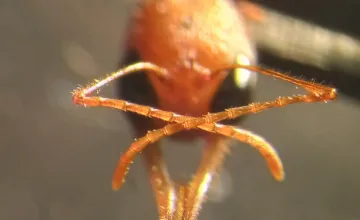
The olfactory senses of ants help them hunt, detect outsiders, and know their role within a colony. In a new study, researchers have discovered how ants can switch one gene on out of hundreds to ensure their survival.
Explore More: University Research
You can filter stories by the university.
The long search for dark matter, estimated to comprise 85% of all mass in the universe, took a major step forward with the underground LUX-ZEPLIN experiment in South Dakota now delivering initial results.
A study from UC San Diego, UCLA, UNC, UW, Columbia, and Northwestern finds that the accelerated biological aging of the body — epigenetic age acceleration specifically — is associated with less longevity, poorer mobility and mental function.
Columbia University | Northwestern University | The University of North Carolina at Chapel Hill | University of California San Diego | University of California, Los Angeles | University of Washington | University Research
Dogs are capable of learning the instruction “do that again,” and can flexibly access memories of their own recent actions — cognitive abilities they were not known to possess, according to the results of a recent University at Buffalo study.
Students who are nonbinary, female or in their second year of college are most affected by academic stress, a Rutgers study finds
Research by scientists at the University of Washington, the Max Planck Institute for Dynamics and Self-Organization and the University of Cologne indicates that carefully designed cocktails of broadly neutralizing antibodies, or bNAbs, could help treat HIV while minimizing the risk of the virus evolving to “escape” treatment.