
AAU universities conduct a majority of the federally funded university research that contributes to our economic competitiveness, health and well-being, and national security. AAU universities are growing our economy through invention and innovation while preparing the next generation of scientists and engineers for global leadership. By moving research into the marketplace AAU universities are helping to create jobs, and provide society with new medicines and technologies.
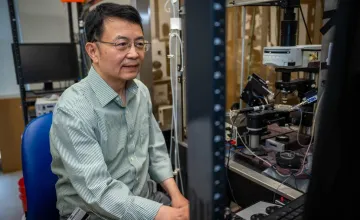
A study by researchers at Duke University School of Medicine found that supplying healthy mitochrondra to damaged nerve cells can signifantly help millions managing pain from diabetic neuropathy and chemotherapy.

Researchers from the USF College of Marine Science are studying soft tissue samples from barnacles, oysters, and fish to better understand the state of contamination and its origins in Tampa Bay, Florida's largest estuary.
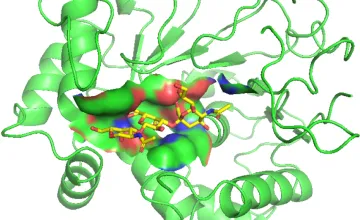
The advancement lays the groundwork for creating a library of sugar-recognizing proteins that may help detect and treat diverse illnesses.
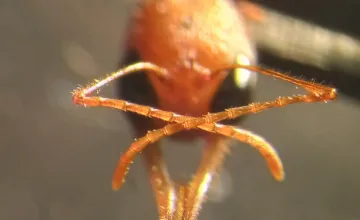
The olfactory senses of ants help them hunt, detect outsiders, and know their role within a colony. In a new study, researchers have discovered how ants can switch one gene on out of hundreds to ensure their survival.
Explore More: University Research
You can filter stories by the university.
An AI-based test developed by researchers at the University of Rochester can help people with Parkinson’s disease remotely assess the severity of their symptoms within minutes.
A research team at Brown has created a machine learning algorithm using computational topology to study how these cells organize themselves into tissue-like architectures. In a new study, they take that system to the next level, opening a path to studying how multiple types of cells assemble themselves.
A team of chemists at Purdue University aims to rid glue of it's severe environmental effects with a new, completely sustainable adhesive system that uses epoxidized soy oil.
University of Arizona President Robert C. Robbins created a commission to identify solutions to the challenges facing Arizona agriculture in a rapidly changing climate. The recommendations are outlined in a new report.
The National Science Foundation has granted the University of Arizona $30 million over five years to establish a new NSF Science and Technology Center, which comes with an additional $30 million funding option over the following five years, will bring together researchers working in topological acoustics.
California Institute of Technology | Georgia Institute of Technology | The University of Arizona | University of California, Los Angeles | University of Colorado Boulder | University Research