
AAU universities conduct a majority of the federally funded university research that contributes to our economic competitiveness, health and well-being, and national security. AAU universities are growing our economy through invention and innovation while preparing the next generation of scientists and engineers for global leadership. By moving research into the marketplace AAU universities are helping to create jobs, and provide society with new medicines and technologies.

A study by researchers at Duke University School of Medicine found that supplying healthy mitochrondra to damaged nerve cells can signifantly help millions managing pain from diabetic neuropathy and chemotherapy.

Researchers from the USF College of Marine Science are studying soft tissue samples from barnacles, oysters, and fish to better understand the state of contamination and its origins in Tampa Bay, Florida's largest estuary.
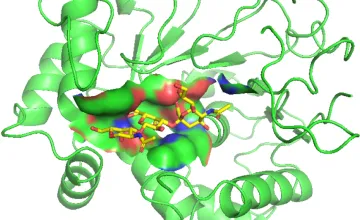
The advancement lays the groundwork for creating a library of sugar-recognizing proteins that may help detect and treat diverse illnesses.

The olfactory senses of ants help them hunt, detect outsiders, and know their role within a colony. In a new study, researchers have discovered how ants can switch one gene on out of hundreds to ensure their survival.
Explore More: University Research
You can filter stories by the university.
A new working paper shows that audits, particularly of higher-income taxpayers, raise significantly more money than they cost.
Using stem cells from patients with Alzheimer’s, investigators found that loss of normal SORL1 function leads to a reduction in two key proteins known to be involved in Alzheimer’s.
Study suggests work from home creates particular challenges for young employees, especially women.
A new study from the University of Chicago has laid out the internal structure of polyelectrolyte complexes for the first time which lead to better drugs and technology.
Despite cost-cutting efforts by businesses, high prices persist at retailers. Harvard research points to consumer behavior shifts, like reduced price sensitivity, as a key factor.