
AAU universities conduct a majority of the federally funded university research that contributes to our economic competitiveness, health and well-being, and national security. AAU universities are growing our economy through invention and innovation while preparing the next generation of scientists and engineers for global leadership. By moving research into the marketplace AAU universities are helping to create jobs, and provide society with new medicines and technologies.

A study by researchers at Duke University School of Medicine found that supplying healthy mitochrondra to damaged nerve cells can signifantly help millions managing pain from diabetic neuropathy and chemotherapy.

Researchers from the USF College of Marine Science are studying soft tissue samples from barnacles, oysters, and fish to better understand the state of contamination and its origins in Tampa Bay, Florida's largest estuary.
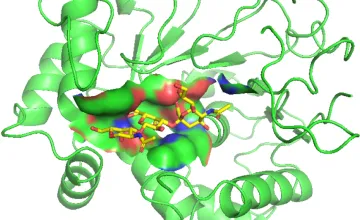
The advancement lays the groundwork for creating a library of sugar-recognizing proteins that may help detect and treat diverse illnesses.

The olfactory senses of ants help them hunt, detect outsiders, and know their role within a colony. In a new study, researchers have discovered how ants can switch one gene on out of hundreds to ensure their survival.
Explore More: University Research
You can filter stories by the university.
Researchers at Stanford and the University of Oregon discovered that virtual reality (VR) can be a powerful tool for improving environmental learning gains and attitudes.
MIT researchers are reproducing paintings using a new system that combines 3-D printing and deep learning.
Acute Flaccid Myelitis (AFM), a rare but incurable disease that has paralyzed at least 116 people in 31 states in 2018, most of them under age 18. Karl Kuban, BU School of Medicine (MED) professor of pediatrics and neurology, answers questions about the disease.
Fasting before getting your blood drawn for cholesterol tests is common practice, but new research from Michigan State University shows it is a contributing factor of low blood sugar, or hypoglycemia, in patients who take diabetes medications.
The dramatic decrease in mortality from heart attack in recent decades is not evident in younger age groups, especially younger women, according to a new study.