
AAU universities conduct a majority of the federally funded university research that contributes to our economic competitiveness, health and well-being, and national security. AAU universities are growing our economy through invention and innovation while preparing the next generation of scientists and engineers for global leadership. By moving research into the marketplace AAU universities are helping to create jobs, and provide society with new medicines and technologies.
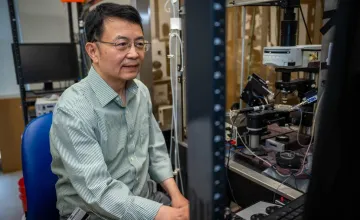
A study by researchers at Duke University School of Medicine found that supplying healthy mitochrondra to damaged nerve cells can signifantly help millions managing pain from diabetic neuropathy and chemotherapy.

Researchers from the USF College of Marine Science are studying soft tissue samples from barnacles, oysters, and fish to better understand the state of contamination and its origins in Tampa Bay, Florida's largest estuary.
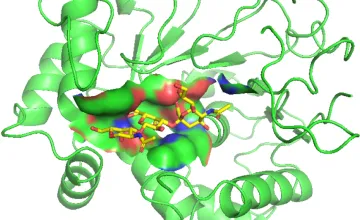
The advancement lays the groundwork for creating a library of sugar-recognizing proteins that may help detect and treat diverse illnesses.
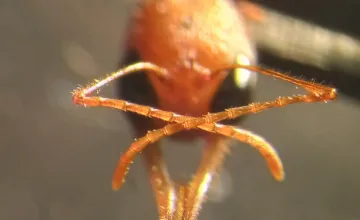
The olfactory senses of ants help them hunt, detect outsiders, and know their role within a colony. In a new study, researchers have discovered how ants can switch one gene on out of hundreds to ensure their survival.
Explore More: University Research
You can filter stories by the university.
Yale researchers have found a new way to leverage soft robotic technology to create a flexible, dextrous gripping device similar to the human hand.
In an unprecedented atlas, researchers begin to map how genes are turned on or off in different cells, a step toward better understanding the connections between genetics and disease
As many as one in five Americans suffer from chronic pain, an often intractable problem that costs the country more than $600 billion in treatments and lost work-time and has helped fuel a deadly opioid epidemic.
Researchers at University at Buffalo, Johns Hopkins, and UC Davis have leveraged the power of digital pathology and computational modeling to develop a new approach to detecting and quantifying podocytes, a kidney cell key to understanding renal disease
The Johns Hopkins University | University at Buffalo - The State University of New York | University of California, Davis | University Research
SDSC researcher leads e-Decision Tree efforts used for classrooms and school buses