
AAU universities conduct a majority of the federally funded university research that contributes to our economic competitiveness, health and well-being, and national security. AAU universities are growing our economy through invention and innovation while preparing the next generation of scientists and engineers for global leadership. By moving research into the marketplace AAU universities are helping to create jobs, and provide society with new medicines and technologies.
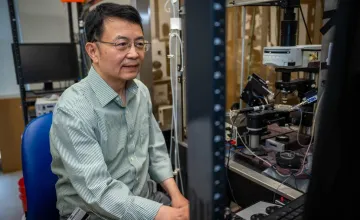
A study by researchers at Duke University School of Medicine found that supplying healthy mitochrondra to damaged nerve cells can signifantly help millions managing pain from diabetic neuropathy and chemotherapy.

Researchers from the USF College of Marine Science are studying soft tissue samples from barnacles, oysters, and fish to better understand the state of contamination and its origins in Tampa Bay, Florida's largest estuary.
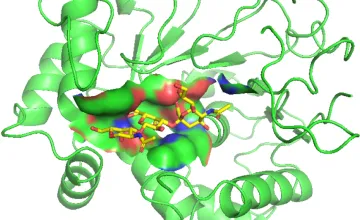
The advancement lays the groundwork for creating a library of sugar-recognizing proteins that may help detect and treat diverse illnesses.

The olfactory senses of ants help them hunt, detect outsiders, and know their role within a colony. In a new study, researchers have discovered how ants can switch one gene on out of hundreds to ensure their survival.
Explore More: University Research
You can filter stories by the university.
This article explores the research efforts at Boston University aimed at understanding and combating Alzheimer's disease.
A Stony Brook University research team demonstrated a network of quantum memories displaying identical performance at room temperature, a fundamental step toward developing quantum repeaters, a necessary process for quantum communication.
Taking an anticoagulant, or blood-thinning medication, can increase one’s risk of—or exacerbate—a brain bleed, also known as a brain hemorrhage, which is the deadliest type of stroke.
Researchers at the University of South Florida have created an algorithm that computes highly accurate, full-color three-dimensional reconstructions of areas behind obstacles – a concept that can help prevent car crashes as well as aid search-and-rescue and strategic military efforts.
Brown-led research found that firearm-related lead ammunition use is an unregulated source of lead exposure in the U.S. that may disproportionately impact children.