
AAU universities conduct a majority of the federally funded university research that contributes to our economic competitiveness, health and well-being, and national security. AAU universities are growing our economy through invention and innovation while preparing the next generation of scientists and engineers for global leadership. By moving research into the marketplace AAU universities are helping to create jobs, and provide society with new medicines and technologies.
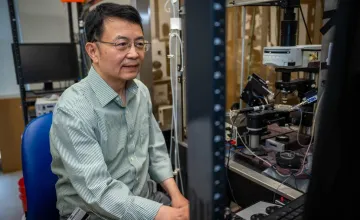
A study by researchers at Duke University School of Medicine found that supplying healthy mitochrondra to damaged nerve cells can signifantly help millions managing pain from diabetic neuropathy and chemotherapy.
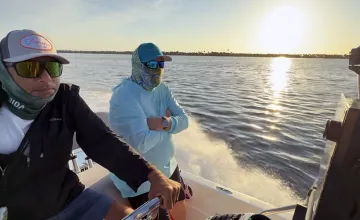
Researchers from the USF College of Marine Science are studying soft tissue samples from barnacles, oysters, and fish to better understand the state of contamination and its origins in Tampa Bay, Florida's largest estuary.
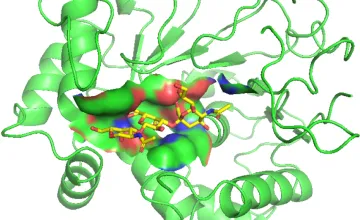
The advancement lays the groundwork for creating a library of sugar-recognizing proteins that may help detect and treat diverse illnesses.
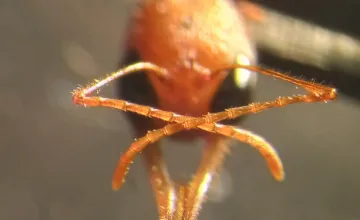
The olfactory senses of ants help them hunt, detect outsiders, and know their role within a colony. In a new study, researchers have discovered how ants can switch one gene on out of hundreds to ensure their survival.
Explore More: University Research
You can filter stories by the university.
A team of researchers from USF St. Petersburg has launched a new app which utilizes crowdsourced photos and artificial intelligence (AI) to track flood conditions in real time and help residents identify potential dangers.
Research into how tiny particles form into concentrated clusters in turbulent environments may positively impact to some scenarios where particle interactions are key, including drug development, storm predictions, and fuel combustion.
Yale researchers have discovered that GLP-1 receptor agonist drugs, like Ozempic and Wegovy, may offer promising new ways of treating alcohol use disorder.
Researchers are studying the long-term impacts of contact sports and how repetitive head impacts can lead to neuron loss, inflammation, and vascular damage in the brain—potentially changing how the risks of contact sports are viewed.
New research from NYU highlights some of the factors that cause icebergs to capsize, their relation to ice melting, and how these models can better measure the impacts of climate change.