
AAU universities conduct a majority of the federally funded university research that contributes to our economic competitiveness, health and well-being, and national security. AAU universities are growing our economy through invention and innovation while preparing the next generation of scientists and engineers for global leadership. By moving research into the marketplace AAU universities are helping to create jobs, and provide society with new medicines and technologies.
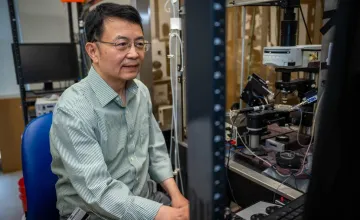
A study by researchers at Duke University School of Medicine found that supplying healthy mitochrondra to damaged nerve cells can signifantly help millions managing pain from diabetic neuropathy and chemotherapy.

Researchers from the USF College of Marine Science are studying soft tissue samples from barnacles, oysters, and fish to better understand the state of contamination and its origins in Tampa Bay, Florida's largest estuary.
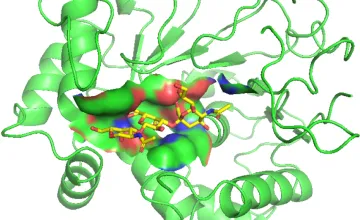
The advancement lays the groundwork for creating a library of sugar-recognizing proteins that may help detect and treat diverse illnesses.
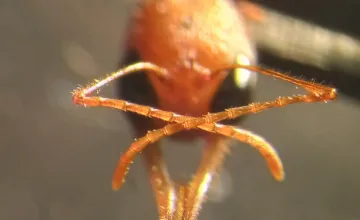
The olfactory senses of ants help them hunt, detect outsiders, and know their role within a colony. In a new study, researchers have discovered how ants can switch one gene on out of hundreds to ensure their survival.
Explore More: University Research
You can filter stories by the university.
Researchers from MIT and the MIT-IBM Watson AI Lab developed a technique to estimate the reliability of foundation AI models before they are deployed to a specific task.
MIT researchers have developed a groundbreaking method, known as IF-COMP, that improves how AI models gauge their confidence in decisions, making predictions more reliable and trustworthy.
MIT researchers examined how large language models fare with variations of different tasks, putting their memorization and reasoning skills to the test. The result: Their reasoning abilities are often overestimated.
UC Santa Cruz researchers have laid out the foundation for their highly-anticipated upcoming study of how lack of affordable housing in urban areas of California may be driving increased development in and near wildlands, leading to more severe climate change impacts.
A research team led by a University of Utah Health researcher has used a precise method of brain imaging to unveil how different parts of the brain work together in order to produce creative thought.