
AAU universities conduct a majority of the federally funded university research that contributes to our economic competitiveness, health and well-being, and national security. AAU universities are growing our economy through invention and innovation while preparing the next generation of scientists and engineers for global leadership. By moving research into the marketplace AAU universities are helping to create jobs, and provide society with new medicines and technologies.

A study by researchers at Duke University School of Medicine found that supplying healthy mitochrondra to damaged nerve cells can signifantly help millions managing pain from diabetic neuropathy and chemotherapy.

Researchers from the USF College of Marine Science are studying soft tissue samples from barnacles, oysters, and fish to better understand the state of contamination and its origins in Tampa Bay, Florida's largest estuary.
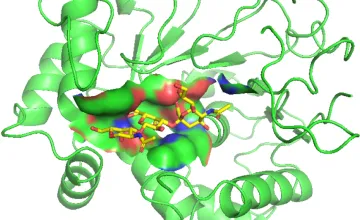
The advancement lays the groundwork for creating a library of sugar-recognizing proteins that may help detect and treat diverse illnesses.
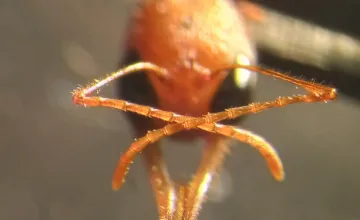
The olfactory senses of ants help them hunt, detect outsiders, and know their role within a colony. In a new study, researchers have discovered how ants can switch one gene on out of hundreds to ensure their survival.
Explore More: University Research
You can filter stories by the university.
The drop in violent crime in the United States since the 1990s coincides with an explosion of community groups, a New York University researcher says.
A Michigan State University scientist will help create artificial “brains” for tiny spacecraft that will mine asteroids between Mars and Jupiter, as part of NASA’s Small Spacecraft Technology Program.
A psychoactive plant called kratom might be a useful tool in the battle to curb opioid addiction, a recent study suggests.
University of Rochester | AAU Universities Battle the Opioid Crisis | Treatment & Prevention | University Research
The bacteria that causes Lyme disease can survive in organ tissue after treatment with a full course of antibiotics months after infection, according to a new primate study of the disease by Tulane University researchers.
As the health care community moves on multiple fronts to address the opioid crisis, one area that holds promise is in litigation against those who manufacture and distribute prescription opioid drugs, according to a University of Michigan researcher.
The Crisis | University of Michigan | AAU Universities Battle the Opioid Crisis | University Research