
AAU universities conduct a majority of the federally funded university research that contributes to our economic competitiveness, health and well-being, and national security. AAU universities are growing our economy through invention and innovation while preparing the next generation of scientists and engineers for global leadership. By moving research into the marketplace AAU universities are helping to create jobs, and provide society with new medicines and technologies.
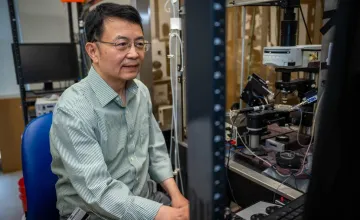
A study by researchers at Duke University School of Medicine found that supplying healthy mitochrondra to damaged nerve cells can signifantly help millions managing pain from diabetic neuropathy and chemotherapy.

Researchers from the USF College of Marine Science are studying soft tissue samples from barnacles, oysters, and fish to better understand the state of contamination and its origins in Tampa Bay, Florida's largest estuary.
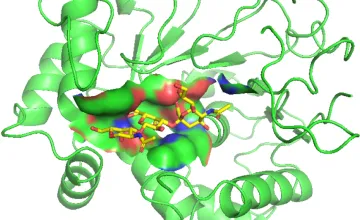
The advancement lays the groundwork for creating a library of sugar-recognizing proteins that may help detect and treat diverse illnesses.
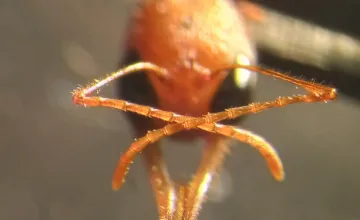
The olfactory senses of ants help them hunt, detect outsiders, and know their role within a colony. In a new study, researchers have discovered how ants can switch one gene on out of hundreds to ensure their survival.
Explore More: University Research
You can filter stories by the university.
In this Q&A, USC clinical assistant professor Theresa Granger walks us through the drawbacks of sleep deprivation, the benefits of getting more (and better) sleep and the easy lifestyle adjustments we can make to improve our sleep habits and quality of sleep.
Rutgers and Stanford researchers develop a new mathematical model to explain how smartphones act as “portable funhouse mirrors” that may lead some to seek plastic surgery.
Michigan State University scientists recommend that officials focus their conservation efforts on fish to protect Michigan's 45 varieties of freshwater mussels.
Researchers have completed the first-ever comprehensive map of how both humans and natural events influence overall coral reef health by studying Hawaii’s once-thriving coral reefs.
Engineers at the University of Maryland (UMD) have for the first time demonstrated that wood can be directly converted into a carbon sponge capable of withstanding repeated compression and other extreme mechanical conditions.