
AAU universities conduct a majority of the federally funded university research that contributes to our economic competitiveness, health and well-being, and national security. AAU universities are growing our economy through invention and innovation while preparing the next generation of scientists and engineers for global leadership. By moving research into the marketplace AAU universities are helping to create jobs, and provide society with new medicines and technologies.
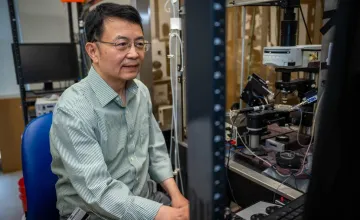
A study by researchers at Duke University School of Medicine found that supplying healthy mitochrondra to damaged nerve cells can signifantly help millions managing pain from diabetic neuropathy and chemotherapy.

Researchers from the USF College of Marine Science are studying soft tissue samples from barnacles, oysters, and fish to better understand the state of contamination and its origins in Tampa Bay, Florida's largest estuary.
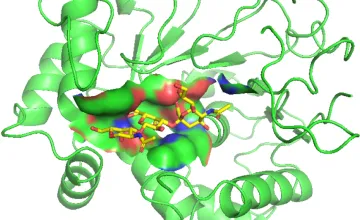
The advancement lays the groundwork for creating a library of sugar-recognizing proteins that may help detect and treat diverse illnesses.

The olfactory senses of ants help them hunt, detect outsiders, and know their role within a colony. In a new study, researchers have discovered how ants can switch one gene on out of hundreds to ensure their survival.
Explore More: University Research
You can filter stories by the university.
This summer, researchers from The University of Texas at Austin and a dozen other research universities will conduct the country‘s largest indoor air quality and surface chemistry experiment aimed at identifying the key causes of indoor air pollution.
Researchers have developed an online tool that helps people who care for those with dementia by helping them anticipate and respond to the behavioral and psychological symptoms of the illness.
Through a $206,184 grant over three years from the Alzheimer’s Foundation of America (AFA), Stony Brook University and Stony Brook Medicine will undertake an innovative Positron Emission Tomography (PET) imaging research project that will bring new insights into the origins of Alzheimer’s disease.
Stony Brook University - The State University of New York | Alzheimers | Researching the Brain, Seeking Cures | University Research
A new Michigan State University study now shows that about one-third of those users become dependent on the drug within one to 12 months, indicating that prior estimates of 20 to 25 percent have been too low.
Kentucky, New Mexico, Tennessee and New York have significantly reduced opioid dosages, according to a new University of Michigan study.
University of Michigan | AAU Universities Battle the Opioid Crisis | Treatment & Prevention | University Research