
AAU universities conduct a majority of the federally funded university research that contributes to our economic competitiveness, health and well-being, and national security. AAU universities are growing our economy through invention and innovation while preparing the next generation of scientists and engineers for global leadership. By moving research into the marketplace AAU universities are helping to create jobs, and provide society with new medicines and technologies.
A study by researchers at Duke University School of Medicine found that supplying healthy mitochrondra to damaged nerve cells can signifantly help millions managing pain from diabetic neuropathy and chemotherapy.
Researchers from the USF College of Marine Science are studying soft tissue samples from barnacles, oysters, and fish to better understand the state of contamination and its origins in Tampa Bay, Florida's largest estuary.
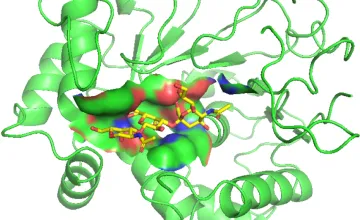
The advancement lays the groundwork for creating a library of sugar-recognizing proteins that may help detect and treat diverse illnesses.
The olfactory senses of ants help them hunt, detect outsiders, and know their role within a colony. In a new study, researchers have discovered how ants can switch one gene on out of hundreds to ensure their survival.
Explore More: University Research
You can filter stories by the university.
A new era of growth in the field of perovskite solar cells began this month, with the publication of a paper that documents the maximum level of perovskite layer thickness that can be synthesized.
A new neurostimulator developed by engineers at UC Berkeley can listen to and stimulate electric current in the brain at the same time, potentially delivering fine-tuned treatments to patients with diseases like epilepsy and Parkinson’s.
University of California, Berkeley | Researching the Brain, Seeking Cures | Parkinson's & Epilepsy | University Research
In a small trial, brain scans revealed who was most at risk of relapsing after being treated for addiction to stimulants like amphetamines or cocaine. The finding could identify people who need help staying drug-free.
Close to 9,000 children and teens in the United States died from opioid poisonings over the last two decades, representing a nearly three-fold increase in mortality rates, Yale researchers said.
A USC scientist has documented the first occurrence of a certain shark species interacting with a pterosaur, a flying reptile species in the age of dinosaurs.