
AAU universities conduct a majority of the federally funded university research that contributes to our economic competitiveness, health and well-being, and national security. AAU universities are growing our economy through invention and innovation while preparing the next generation of scientists and engineers for global leadership. By moving research into the marketplace AAU universities are helping to create jobs, and provide society with new medicines and technologies.
A study by researchers at Duke University School of Medicine found that supplying healthy mitochrondra to damaged nerve cells can signifantly help millions managing pain from diabetic neuropathy and chemotherapy.
Researchers from the USF College of Marine Science are studying soft tissue samples from barnacles, oysters, and fish to better understand the state of contamination and its origins in Tampa Bay, Florida's largest estuary.
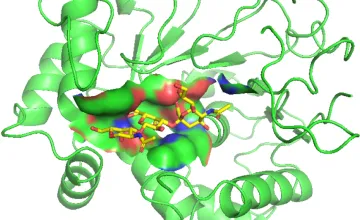
The advancement lays the groundwork for creating a library of sugar-recognizing proteins that may help detect and treat diverse illnesses.
The olfactory senses of ants help them hunt, detect outsiders, and know their role within a colony. In a new study, researchers have discovered how ants can switch one gene on out of hundreds to ensure their survival.
Explore More: University Research
You can filter stories by the university.
A Rutgers pediatrician specializing in critical care discusses how to differentiate among multisystem inflammatory syndrome, acute COVID-19 and Kawasaki disease in children.
A specific wavelength of ultraviolet radiation killed more than 99.99% of SARS-CoV-2, which causes COVID-19, a new study found.
Stony Brook University scientists have published a study showing that inhibiting the KRAS gene and activating immune pathways suppressed by cancer could improve the treatment of pancreatic cancer.
Impressive computing capability comes with real costs, including perpetuating racism and causing significant environmental damage, according to a new paper, “On the Dangers of Stochastic Parrots: Can Language Models Be Too Big?"
Since the pandemic struck the United States more than a year ago, Indiana University Bloomington virologist John Patton, graduate student Asha Philip and others have been working on a COVID-19 vaccine for young children, based on a well-established childhood vaccine for the common illness rotavirus.