
AAU universities conduct a majority of the federally funded university research that contributes to our economic competitiveness, health and well-being, and national security. AAU universities are growing our economy through invention and innovation while preparing the next generation of scientists and engineers for global leadership. By moving research into the marketplace AAU universities are helping to create jobs, and provide society with new medicines and technologies.
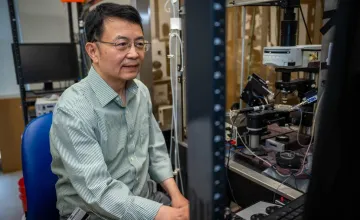
A study by researchers at Duke University School of Medicine found that supplying healthy mitochrondra to damaged nerve cells can signifantly help millions managing pain from diabetic neuropathy and chemotherapy.

Researchers from the USF College of Marine Science are studying soft tissue samples from barnacles, oysters, and fish to better understand the state of contamination and its origins in Tampa Bay, Florida's largest estuary.
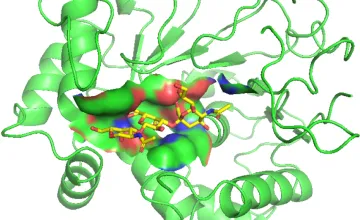
The advancement lays the groundwork for creating a library of sugar-recognizing proteins that may help detect and treat diverse illnesses.
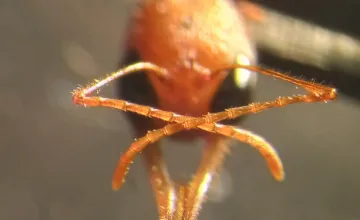
The olfactory senses of ants help them hunt, detect outsiders, and know their role within a colony. In a new study, researchers have discovered how ants can switch one gene on out of hundreds to ensure their survival.
Explore More: University Research
You can filter stories by the university.
NYU College of Dentistry is pioneering custom VR technology to help dental students practice anesthesia injections safely and confidently, revolutionizing hands-on training in oral healthcare.
Mandibular distraction, led by the University of Buffalo’s Michael Markiewicz, enables Israeli baby to breathe, eat on her own.
Theoretical study suggests that small black holes born in early universe may have left behind hollow planetoids and microscopic tunnels, and that we should start searching rocks and old buildings for them
Stony Brook physicist Dmitri Kharzeev and collaborators have mapped quantum entanglement in protons for the first time, an advance that could transform quantum computing, particle physics, and our understanding of the universe’s fundamental building blocks.
Stony Brook Medicine is the first on Long Island to use FDA-approved vagus nerve stimulation (VNS) to help stroke survivors regain hand and arm function, even years after their stroke.