
AAU universities conduct a majority of the federally funded university research that contributes to our economic competitiveness, health and well-being, and national security. AAU universities are growing our economy through invention and innovation while preparing the next generation of scientists and engineers for global leadership. By moving research into the marketplace AAU universities are helping to create jobs, and provide society with new medicines and technologies.
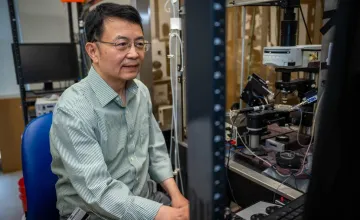
A study by researchers at Duke University School of Medicine found that supplying healthy mitochrondra to damaged nerve cells can signifantly help millions managing pain from diabetic neuropathy and chemotherapy.

Researchers from the USF College of Marine Science are studying soft tissue samples from barnacles, oysters, and fish to better understand the state of contamination and its origins in Tampa Bay, Florida's largest estuary.
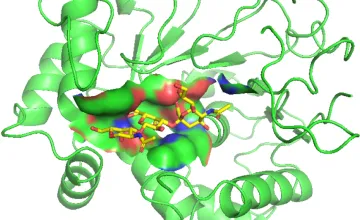
The advancement lays the groundwork for creating a library of sugar-recognizing proteins that may help detect and treat diverse illnesses.
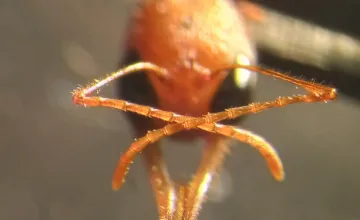
The olfactory senses of ants help them hunt, detect outsiders, and know their role within a colony. In a new study, researchers have discovered how ants can switch one gene on out of hundreds to ensure their survival.
Explore More: University Research
You can filter stories by the university.
Researchers at BU have found that dialing back—or even genetically deleting—a protein that seems to spur oral cancer’s growth might help limit a tumor’s development and spread.
A multi-institutional team including Yale School of Medicine (YSM) has demonstrated the ability to use ultrasound to stimulate specific neurometabolic pathways in the body to prevent or reverse the onset of type 2 diabetes in three different preclinical models. The team, which includes the lab of Raimund Herzog, MD, MHS, at YSM, reported its findings in Nature Biomedical Engineering.
Researchers at Yale and Caltech have a bold new theory to explain how Earth transformed itself from a fiery, carbon-clouded ball of rocks into a planet capable of sustaining life.
Experts at Stony Brook University report the formation of matter-wave polaritons in an optical lattice, an experimental discovery that enables studies of a central QIST paradigm through direct quantum simulation using ultracold atoms.
John Hwa and his team encapsulated the work produced on platelets over the years in a review article in Nature Cardiovascular Research. Learn more about their work.