
AAU universities conduct a majority of the federally funded university research that contributes to our economic competitiveness, health and well-being, and national security. AAU universities are growing our economy through invention and innovation while preparing the next generation of scientists and engineers for global leadership. By moving research into the marketplace AAU universities are helping to create jobs, and provide society with new medicines and technologies.
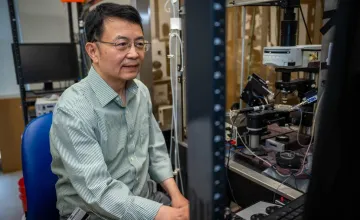
A study by researchers at Duke University School of Medicine found that supplying healthy mitochrondra to damaged nerve cells can signifantly help millions managing pain from diabetic neuropathy and chemotherapy.

Researchers from the USF College of Marine Science are studying soft tissue samples from barnacles, oysters, and fish to better understand the state of contamination and its origins in Tampa Bay, Florida's largest estuary.
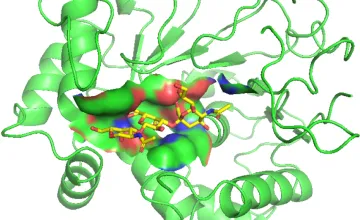
The advancement lays the groundwork for creating a library of sugar-recognizing proteins that may help detect and treat diverse illnesses.
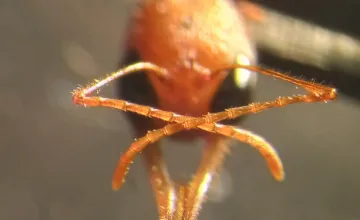
The olfactory senses of ants help them hunt, detect outsiders, and know their role within a colony. In a new study, researchers have discovered how ants can switch one gene on out of hundreds to ensure their survival.
Explore More: University Research
You can filter stories by the university.
Astronomers are celebrating the completion of a 2.5-billion-pixel panoramic picture of the entire Andromeda Galaxy. The team includes several UC Santa Cruz researchers who made significant contributions to the enormous photomosaic that combines some 600 snapshots taken by the Hubble Space Telescope over more than a decade and 1,000 orbits.
Researchers at Purdue University have made advancements in the desalination process, challenging the common assumption that there is limited room for improvement in this energy-intensive method of addressing water scarcity.
A recent study published by researchers at the University of Kansas and Brown University examined how adults' next-day responsibilities influence their decisions about cannabis consumption.
Yale scientists have developed a treatment approach that simultaneously targets multiple immune-suppressing genes and inhibits growth in four types of cancer.
Researchers at Purdue University’s Elmore Family School of Electrical and Computer Engineering, in collaboration with Michigan State University, are leading an innovative project aimed at making irrigation more efficient and cost-effective for farmers.