
AAU universities conduct a majority of the federally funded university research that contributes to our economic competitiveness, health and well-being, and national security. AAU universities are growing our economy through invention and innovation while preparing the next generation of scientists and engineers for global leadership. By moving research into the marketplace AAU universities are helping to create jobs, and provide society with new medicines and technologies.
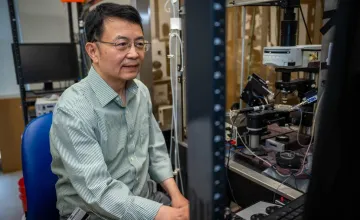
A study by researchers at Duke University School of Medicine found that supplying healthy mitochrondra to damaged nerve cells can signifantly help millions managing pain from diabetic neuropathy and chemotherapy.

Researchers from the USF College of Marine Science are studying soft tissue samples from barnacles, oysters, and fish to better understand the state of contamination and its origins in Tampa Bay, Florida's largest estuary.
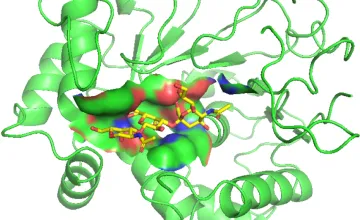
The advancement lays the groundwork for creating a library of sugar-recognizing proteins that may help detect and treat diverse illnesses.
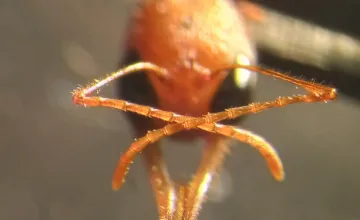
The olfactory senses of ants help them hunt, detect outsiders, and know their role within a colony. In a new study, researchers have discovered how ants can switch one gene on out of hundreds to ensure their survival.
Explore More: University Research
You can filter stories by the university.
According to new research some parts of the Arctic are getting deeper snowpack than normal, driving the thawing of long-frozen permafrost carbon reserves which increases emissions of greenhouse gases.
Long-term exposure to low-dose radiation is linked to an increased risk of cancer, according to a study led by the University of California, Irvine
Using innovative fluorescent sensors and computational modeling, CU Boulder biochemistry researcher Amy Palmer tracked naturally cycling cells to better understand effect of zinc levels.
e. An international collaboration of scientists used global power plant data to demonstrate an integrated water-carbon management framework that bridges the gap to coupling diverse water carbon-mitigation technologies with other methods.
A new study on epigenetic rather than genetic changes that drive normal cells to form tumors.