
AAU universities conduct a majority of the federally funded university research that contributes to our economic competitiveness, health and well-being, and national security. AAU universities are growing our economy through invention and innovation while preparing the next generation of scientists and engineers for global leadership. By moving research into the marketplace AAU universities are helping to create jobs, and provide society with new medicines and technologies.
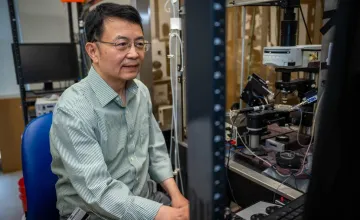
A study by researchers at Duke University School of Medicine found that supplying healthy mitochrondra to damaged nerve cells can signifantly help millions managing pain from diabetic neuropathy and chemotherapy.

Researchers from the USF College of Marine Science are studying soft tissue samples from barnacles, oysters, and fish to better understand the state of contamination and its origins in Tampa Bay, Florida's largest estuary.
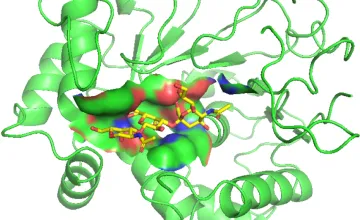
The advancement lays the groundwork for creating a library of sugar-recognizing proteins that may help detect and treat diverse illnesses.
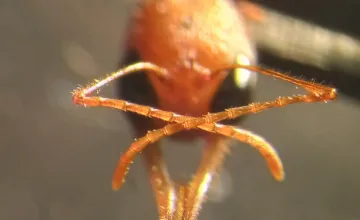
The olfactory senses of ants help them hunt, detect outsiders, and know their role within a colony. In a new study, researchers have discovered how ants can switch one gene on out of hundreds to ensure their survival.
Explore More: University Research
You can filter stories by the university.
Princeton University’s Jesse Jenkins, assistant professor of mechanical and aerospace engineering and the Andlinger Center for Energy and the Environment, has been a leader of both the national and the global charge to net-zero, along with his Net-Zero America project collaborators.
To help solve hunger and malnutrition while also slowing climate change, some farmers could shift from land to sea, suggests a recent study from Tufts University.
Researchers have submitted a set of papers featuring a groundbreaking new map of dark matter distributed across a quarter of the sky, extending deep into the cosmos, that confirms Einstein’s theory of how massive structures grow and bend light over the 14-billion-year life span of the universe.
A breakthrough study, co-authored by Yale research scientists and a team of international scientists, provides the most comprehensive estimate to date of monthly methane emissions from rivers and streams worldwide.
Researchers found that environmental pollutants like road salt influence whether increased biodiversity helps or hinders disease outbreaks in wildlife, which can complicate how we value protecting diverse animal communities.