
AAU universities conduct a majority of the federally funded university research that contributes to our economic competitiveness, health and well-being, and national security. AAU universities are growing our economy through invention and innovation while preparing the next generation of scientists and engineers for global leadership. By moving research into the marketplace AAU universities are helping to create jobs, and provide society with new medicines and technologies.
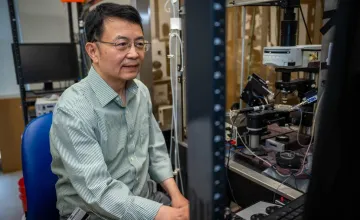
A study by researchers at Duke University School of Medicine found that supplying healthy mitochrondra to damaged nerve cells can signifantly help millions managing pain from diabetic neuropathy and chemotherapy.
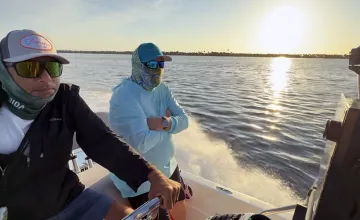
Researchers from the USF College of Marine Science are studying soft tissue samples from barnacles, oysters, and fish to better understand the state of contamination and its origins in Tampa Bay, Florida's largest estuary.
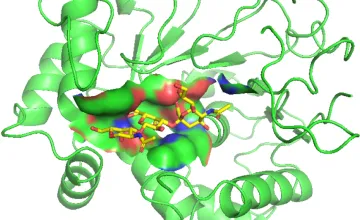
The advancement lays the groundwork for creating a library of sugar-recognizing proteins that may help detect and treat diverse illnesses.
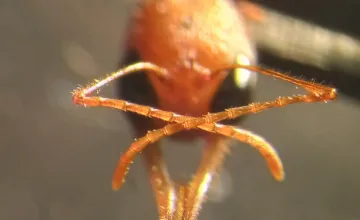
The olfactory senses of ants help them hunt, detect outsiders, and know their role within a colony. In a new study, researchers have discovered how ants can switch one gene on out of hundreds to ensure their survival.
Explore More: University Research
You can filter stories by the university.
Researchers at Purdue are seeking to validate genomic breeding tools while designing a system that honeybee breeders can implement themselves.
A new artificial intelligence (AI) tool may make it possible to spare breast cancer patients unnecessary chemotherapy treatments by using a more precise method of predicting their outcomes, reports a new Northwestern Medicine study.
an assistant professor of electrical engineering at Arizona State University, is working on NASA research to build a blueprint for building semiconductor devices in space.
An assistant research professor at Arizona State University received a $100,000 prize for his development of a solar-powered light that doubles as a buoy to reduce bycatch of endangered sea turtles, sharks and marine mammals while maintaining target fish catch.
A chemotherapy drug used to fight bone-marrow cancer has the potential to treat and prevent potentially deadly heart failure, a powerful new drug-screening tool developed at UVA Health suggests.