
AAU universities conduct a majority of the federally funded university research that contributes to our economic competitiveness, health and well-being, and national security. AAU universities are growing our economy through invention and innovation while preparing the next generation of scientists and engineers for global leadership. By moving research into the marketplace AAU universities are helping to create jobs, and provide society with new medicines and technologies.
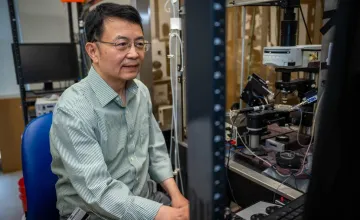
A study by researchers at Duke University School of Medicine found that supplying healthy mitochrondra to damaged nerve cells can signifantly help millions managing pain from diabetic neuropathy and chemotherapy.

Researchers from the USF College of Marine Science are studying soft tissue samples from barnacles, oysters, and fish to better understand the state of contamination and its origins in Tampa Bay, Florida's largest estuary.
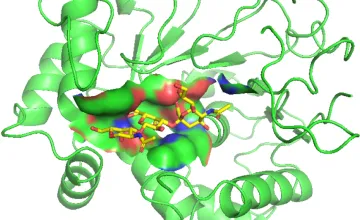
The advancement lays the groundwork for creating a library of sugar-recognizing proteins that may help detect and treat diverse illnesses.
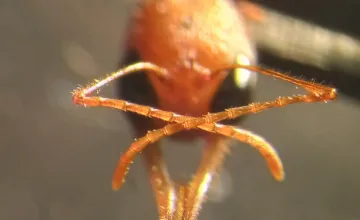
The olfactory senses of ants help them hunt, detect outsiders, and know their role within a colony. In a new study, researchers have discovered how ants can switch one gene on out of hundreds to ensure their survival.
Explore More: University Research
You can filter stories by the university.
A group of University at Buffalo infectious disease physicians are aiming to shift away from the traditional paradigm of medical missions, which can sometimes echo colonial practices.
Research from SBU reveals a shift in public opinion on AI, particularly in the context of the advancements symbolized by the release of OpenAI’s ChatGPT.
A new study led by the University of California, Irvine has revealed a potential shift in our basic knowledge of the origins of birth defects, which affect about 3 percent of babies born in the United States each year.
Scientists have used electrical pulses to manipulate magnetic information into a polarized light signal, a discovery that could revolutionize long-distance optical telecommunications, including between Earth and Mars.
A professor from UC Santa Cruz has been awarded a $2.5 million grant from the National Institutes of Health's R01 program to explore the role of gene isoforms in lung cancer progression and treatment response.