
AAU universities conduct a majority of the federally funded university research that contributes to our economic competitiveness, health and well-being, and national security. AAU universities are growing our economy through invention and innovation while preparing the next generation of scientists and engineers for global leadership. By moving research into the marketplace AAU universities are helping to create jobs, and provide society with new medicines and technologies.

A study by researchers at Duke University School of Medicine found that supplying healthy mitochrondra to damaged nerve cells can signifantly help millions managing pain from diabetic neuropathy and chemotherapy.

Researchers from the USF College of Marine Science are studying soft tissue samples from barnacles, oysters, and fish to better understand the state of contamination and its origins in Tampa Bay, Florida's largest estuary.

The advancement lays the groundwork for creating a library of sugar-recognizing proteins that may help detect and treat diverse illnesses.
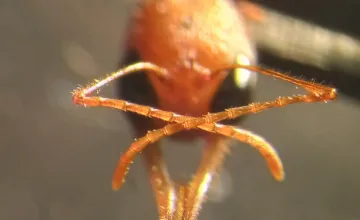
The olfactory senses of ants help them hunt, detect outsiders, and know their role within a colony. In a new study, researchers have discovered how ants can switch one gene on out of hundreds to ensure their survival.
Explore More: University Research
You can filter stories by the university.
A team of researchers at the University of Missouri is uncovering how the juice from red cabbage can alleviate inflammation-associated digestive health conditions such as inflammatory bowel disease (IBD) in mice.
A UK professor examines the human biases that impede AI’s assessment. His experiments find that people are prone to underestimate AI capabilities due to exponential growth bias
A project led by an associate professor of classics at the University of Kansas is focused on translating and analyzing Emperor Diocletian's Edict of Maximum Prices from 301 C.E., an ancient Roman decree attempted to cap prices on a wide range of goods and services to combat inflation and curb merchant greed.
mathematicians from NYU are exploring the aerodynamics of birds flying in flocks and its potential implications for transportation and energy efficiency.
Researchers from CU Boulder are studying why people sometimes choose entertainment options that are widely regarded as terrible, a behavior that seems to contradict typical consumer preferences for quality.
Arizona State University | University of Colorado Boulder | University of Pennsylvania | University Research