
AAU universities conduct a majority of the federally funded university research that contributes to our economic competitiveness, health and well-being, and national security. AAU universities are growing our economy through invention and innovation while preparing the next generation of scientists and engineers for global leadership. By moving research into the marketplace AAU universities are helping to create jobs, and provide society with new medicines and technologies.
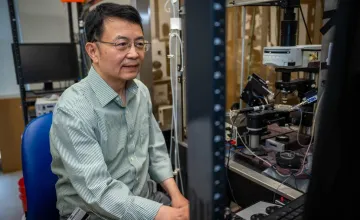
A study by researchers at Duke University School of Medicine found that supplying healthy mitochrondra to damaged nerve cells can signifantly help millions managing pain from diabetic neuropathy and chemotherapy.

Researchers from the USF College of Marine Science are studying soft tissue samples from barnacles, oysters, and fish to better understand the state of contamination and its origins in Tampa Bay, Florida's largest estuary.
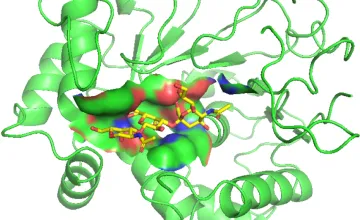
The advancement lays the groundwork for creating a library of sugar-recognizing proteins that may help detect and treat diverse illnesses.
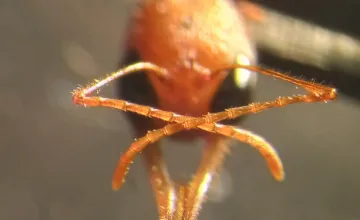
The olfactory senses of ants help them hunt, detect outsiders, and know their role within a colony. In a new study, researchers have discovered how ants can switch one gene on out of hundreds to ensure their survival.
Explore More: University Research
You can filter stories by the university.
MIT PhD student Natasha Wright makes water safe to drink for rural, off-grid Indian villages by designed a village-scale desalination system that runs on solar power.
For the first time, a map of fecal viruses traveling our global waterways has been created using modeling methods to aid in assessing water quality worldwide.
In every agricultural region on Earth, huge amounts of the structural parts of crops -- things like cornstalks, sugar canes, beanstalks, and wheat stems -- are discarded because we haven't figured out a way to convert them into fuel. Plant scientist Daniel Cosgrove, who has devoted decades to studying the cell walls that make plant matter resistant to chemical conversion, thinks it doesn't have to be that way.
University of Oregon researchers "very bad day" in the lab leads to the development of a wireless sensor that can measure the amount of nitrogen in the soil saving growers millions.
In this Web edition of UT Game Changers on The Longhorn Network, Todd Humphreys addresses the current use and future potential of GPS technology.