
AAU universities conduct a majority of the federally funded university research that contributes to our economic competitiveness, health and well-being, and national security. AAU universities are growing our economy through invention and innovation while preparing the next generation of scientists and engineers for global leadership. By moving research into the marketplace AAU universities are helping to create jobs, and provide society with new medicines and technologies.
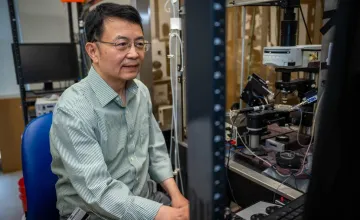
A study by researchers at Duke University School of Medicine found that supplying healthy mitochrondra to damaged nerve cells can signifantly help millions managing pain from diabetic neuropathy and chemotherapy.

Researchers from the USF College of Marine Science are studying soft tissue samples from barnacles, oysters, and fish to better understand the state of contamination and its origins in Tampa Bay, Florida's largest estuary.
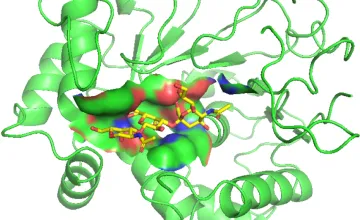
The advancement lays the groundwork for creating a library of sugar-recognizing proteins that may help detect and treat diverse illnesses.
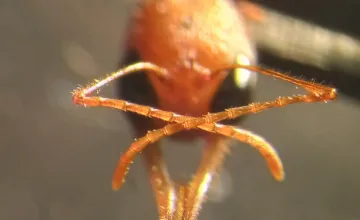
The olfactory senses of ants help them hunt, detect outsiders, and know their role within a colony. In a new study, researchers have discovered how ants can switch one gene on out of hundreds to ensure their survival.
Explore More: University Research
You can filter stories by the university.
Minutes count when treating stroke, but current diagnostics take as long as three hours, careful lab work and skilled technicians to arrive at a conclusive diagnosis. Scientists at Cornell’s Baker Institute for Animal Health have developed a device that helps diagnose stroke in less than 10 minutes using a drop of blood barely big enough to moisten your fingertip.
UF researchers have developed a low-cost treatment system to remove pharmaceuticals in source-separated urine using water materials.
By using photons to communicate between two electrons through more than a mile of fiber optic cable, physicists have taken an important step toward proving the practicality of quantum networks.
While the relationship between genetic factors and outcomes after brain injury is beginning to receive more attention recently, little study has been devoted to specific genes and their effects on concussion recovery.
Without having to learn new technical skills or adapt to changes in the operating room, surgeons get a better view of blood flowing inside vessels and a better view of tissues, thanks to new microscopy technology developed at the UA.