
AAU universities conduct a majority of the federally funded university research that contributes to our economic competitiveness, health and well-being, and national security. AAU universities are growing our economy through invention and innovation while preparing the next generation of scientists and engineers for global leadership. By moving research into the marketplace AAU universities are helping to create jobs, and provide society with new medicines and technologies.
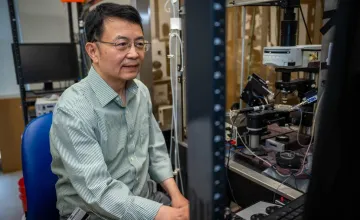
A study by researchers at Duke University School of Medicine found that supplying healthy mitochrondra to damaged nerve cells can signifantly help millions managing pain from diabetic neuropathy and chemotherapy.

Researchers from the USF College of Marine Science are studying soft tissue samples from barnacles, oysters, and fish to better understand the state of contamination and its origins in Tampa Bay, Florida's largest estuary.
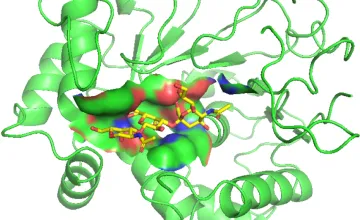
The advancement lays the groundwork for creating a library of sugar-recognizing proteins that may help detect and treat diverse illnesses.
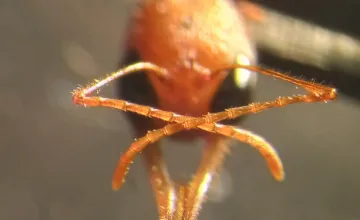
The olfactory senses of ants help them hunt, detect outsiders, and know their role within a colony. In a new study, researchers have discovered how ants can switch one gene on out of hundreds to ensure their survival.
Explore More: University Research
You can filter stories by the university.
In collaboration with labs in Japan, Spain and Sweden, University of Oregon scientists open a pathway to design and put biradical compounds to work.
Boston University study finds benefits for all ratepayers and greater reduction in greenhouse gases.
Researchers discover a method to change emotionally charged memory patterns.
Stony Brook University - The State University of New York | Alzheimers | Researching the Brain, Seeking Cures
At least one in five U.S. military veterans who have experienced trauma are at greatly elevated risk for depression, suicide, or substance abuse even though they do not meet all criteria for post-traumatic stress disorder (PTSD), according to a new Yale-led study.
“Analyst-driven solutions” rely on rules created by living experts and miss attacks that don’t match the rules. Machine-learning approaches rely on “anomaly detection,” which triggers false positives needing investigation by humans.
Massachusetts Institute of Technology | Protecting Individual Data | Protecting Systems | Safeguarding the Connected World