
AAU universities conduct a majority of the federally funded university research that contributes to our economic competitiveness, health and well-being, and national security. AAU universities are growing our economy through invention and innovation while preparing the next generation of scientists and engineers for global leadership. By moving research into the marketplace AAU universities are helping to create jobs, and provide society with new medicines and technologies.

A study by researchers at Duke University School of Medicine found that supplying healthy mitochrondra to damaged nerve cells can signifantly help millions managing pain from diabetic neuropathy and chemotherapy.

Researchers from the USF College of Marine Science are studying soft tissue samples from barnacles, oysters, and fish to better understand the state of contamination and its origins in Tampa Bay, Florida's largest estuary.
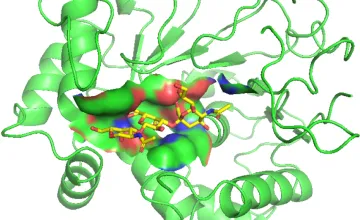
The advancement lays the groundwork for creating a library of sugar-recognizing proteins that may help detect and treat diverse illnesses.

The olfactory senses of ants help them hunt, detect outsiders, and know their role within a colony. In a new study, researchers have discovered how ants can switch one gene on out of hundreds to ensure their survival.
Explore More: University Research
You can filter stories by the university.
Plant-based sensors that measure a leaf's thickness and ability to store an electrical charge can tell farmers when crops need water, Penn State researcher said.
Stanford scholar Shanto Iyengar finds that people are more attached to their political parties than to their own race or religion.
An existing drug may one day protect premenopausal women from life-altering infertility that commonly follows cancer treatments, according to a new study from Cornell University.
A Brandeis University researcher found and fixed an abnormality in flies' nervous system, restoring their ability to crawl. Understanding what goes wrong inside nerve cells could have implications for human disease.
The majority of patients misusing both opioids and benzodiazepines (BZDs) recognize the risks of overdose and substance dependence, but need more education and motivation to stop concurrent use, says new research led by a School of Public Health addiction expert.
Boston University | AAU Universities Battle the Opioid Crisis | Treatment & Prevention | University Research