
AAU universities conduct a majority of the federally funded university research that contributes to our economic competitiveness, health and well-being, and national security. AAU universities are growing our economy through invention and innovation while preparing the next generation of scientists and engineers for global leadership. By moving research into the marketplace AAU universities are helping to create jobs, and provide society with new medicines and technologies.
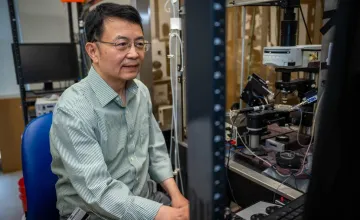
A study by researchers at Duke University School of Medicine found that supplying healthy mitochrondra to damaged nerve cells can signifantly help millions managing pain from diabetic neuropathy and chemotherapy.

Researchers from the USF College of Marine Science are studying soft tissue samples from barnacles, oysters, and fish to better understand the state of contamination and its origins in Tampa Bay, Florida's largest estuary.
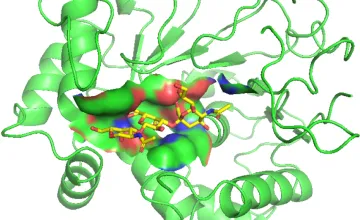
The advancement lays the groundwork for creating a library of sugar-recognizing proteins that may help detect and treat diverse illnesses.
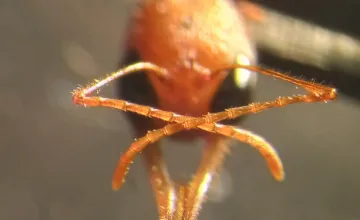
The olfactory senses of ants help them hunt, detect outsiders, and know their role within a colony. In a new study, researchers have discovered how ants can switch one gene on out of hundreds to ensure their survival.
Explore More: University Research
You can filter stories by the university.
The U.S. Department of Energy (DOE) awarded the University of Illinois a $10.6 million, five-year grant to transform two of the most productive crops in America into sustainable sources of biodiesel and biojet fuel.
Energy Sources | University of Illinois Urbana-Champaign | Research to Secure Our Energy Future | University Research
A new study finds that young children see words and faces differently from adults, a finding that could help in understanding how children learn to read.
Scientists are developing a rapid diagnostic test for the Zika virus that uses saliva.
Many opioid abusers switch to heroin because it’s more potent and cheaper. This trend complicates disease prevention because people inject heroin much sooner, potentially resulting in increased risk of injection-related epidemics such as hepatitis C and HIV.
The Crisis | University of Southern California | AAU Universities Battle the Opioid Crisis | University Research
Researchers at Texas A&M have developed technology for talking books that allows people who are blind to access more literature with increased command over their reading experiences.