
AAU universities conduct a majority of the federally funded university research that contributes to our economic competitiveness, health and well-being, and national security. AAU universities are growing our economy through invention and innovation while preparing the next generation of scientists and engineers for global leadership. By moving research into the marketplace AAU universities are helping to create jobs, and provide society with new medicines and technologies.
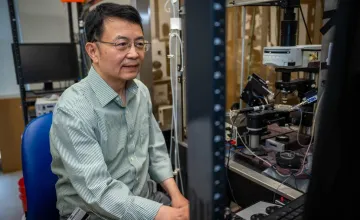
A study by researchers at Duke University School of Medicine found that supplying healthy mitochrondra to damaged nerve cells can signifantly help millions managing pain from diabetic neuropathy and chemotherapy.

Researchers from the USF College of Marine Science are studying soft tissue samples from barnacles, oysters, and fish to better understand the state of contamination and its origins in Tampa Bay, Florida's largest estuary.
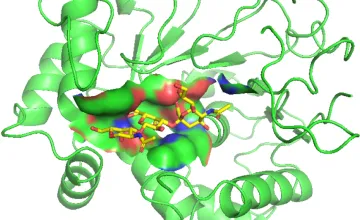
The advancement lays the groundwork for creating a library of sugar-recognizing proteins that may help detect and treat diverse illnesses.
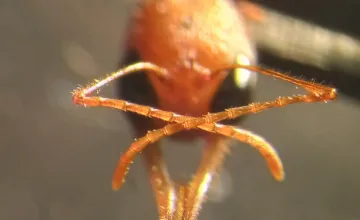
The olfactory senses of ants help them hunt, detect outsiders, and know their role within a colony. In a new study, researchers have discovered how ants can switch one gene on out of hundreds to ensure their survival.
Explore More: University Research
You can filter stories by the university.
New research from the University of Chicago suggests that alternative splicing may have an even greater influence on biology than just by creating new protein isoforms
The overlap between humans and animals will increase substantially across much of the planet in less than 50 years due to human population growth and climate change, according to a collaborative study by scientists at the University of Michigan, the University of Washington and University College London.
A gene therapy developed by University of Florida scientists, restored useful vision to most patients with the rare, inherited blindness known as Leber congenital amaurosis type I, or LCA1, in a small trial.
A new study from uncovers significant associations between social vulnerability and the prevalence and treatment of mental health and substance use disorders in the United States.
Yale researchers have uncovered a way to make a type of white blood cells known as natural killer cells — which kill infected, damaged, or malignant cells in the body — more effective against cancer. The approach, they say, could enable new treatments for solid tumors in the future.