
AAU universities conduct a majority of the federally funded university research that contributes to our economic competitiveness, health and well-being, and national security. AAU universities are growing our economy through invention and innovation while preparing the next generation of scientists and engineers for global leadership. By moving research into the marketplace AAU universities are helping to create jobs, and provide society with new medicines and technologies.

A study by researchers at Duke University School of Medicine found that supplying healthy mitochrondra to damaged nerve cells can signifantly help millions managing pain from diabetic neuropathy and chemotherapy.

Researchers from the USF College of Marine Science are studying soft tissue samples from barnacles, oysters, and fish to better understand the state of contamination and its origins in Tampa Bay, Florida's largest estuary.
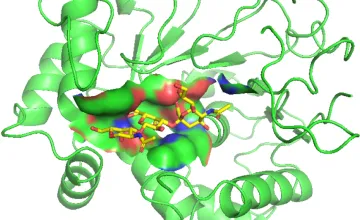
The advancement lays the groundwork for creating a library of sugar-recognizing proteins that may help detect and treat diverse illnesses.
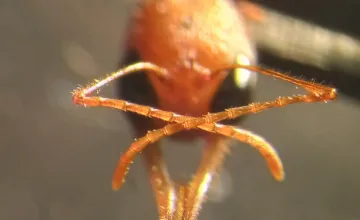
The olfactory senses of ants help them hunt, detect outsiders, and know their role within a colony. In a new study, researchers have discovered how ants can switch one gene on out of hundreds to ensure their survival.
Explore More: University Research
You can filter stories by the university.
Researchers at the University of Virginia have developed a new 3D-printable material made from polyethylene glycol that could advance medical technology for organ transplants and drug delivery.
URochester researchers develop algorithms that reveal how propane becomes propylene for everyday products.
Researchers at the University of Rochester have designed and demonstrated a new optical component that could significantly enhance the brightness and image quality of augmented reality (AR) glasses. The advance brings AR glasses a step closer to becoming as commonplace and useful as today’s smartphones.
A Yale study found that cytosolic phospholipase A2 (cPLA2) — an important enzyme — plays a key role in inflammation and cartilage breakdown, suggesting that cPLA2 could be a possible target for treating joint diseases.
Researchers have developed a monoclonal antibody that is showing promise as a new therapy for patients of fibrotic diseases, along with the discovery of a signaling pathway that may be mediating fibrosis and could be a target for future therapies.