
AAU universities conduct a majority of the federally funded university research that contributes to our economic competitiveness, health and well-being, and national security. AAU universities are growing our economy through invention and innovation while preparing the next generation of scientists and engineers for global leadership. By moving research into the marketplace AAU universities are helping to create jobs, and provide society with new medicines and technologies.
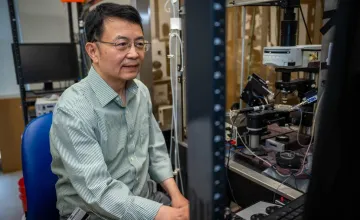
A study by researchers at Duke University School of Medicine found that supplying healthy mitochrondra to damaged nerve cells can signifantly help millions managing pain from diabetic neuropathy and chemotherapy.

Researchers from the USF College of Marine Science are studying soft tissue samples from barnacles, oysters, and fish to better understand the state of contamination and its origins in Tampa Bay, Florida's largest estuary.
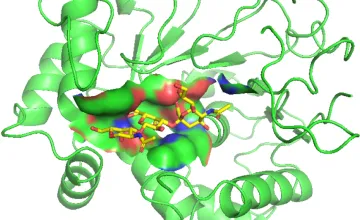
The advancement lays the groundwork for creating a library of sugar-recognizing proteins that may help detect and treat diverse illnesses.

The olfactory senses of ants help them hunt, detect outsiders, and know their role within a colony. In a new study, researchers have discovered how ants can switch one gene on out of hundreds to ensure their survival.
Explore More: University Research
You can filter stories by the university.
Researchers at UNC are asking the tough questions to ensure that the driverless car picking you up will be safe for passengers, bicyclists, and pedestrians alike.
New research highlights a previously underexplored consequence of wind energy farms: a wake effect from upwind wind farms that can reduce the energy production of their downwind neighbors.
Politeness in advertising, especially too much, matters when it comes to trusting a company’s brand.
Speaking directly to the baby with a style of speech known as “parentese” — talking slowly and clearly, often with exaggerated vowels and intonation — appears to improve infant language development, a new study shows.
According to a new study, the brain plays back and prioritizes high-reward events for later retrieval and filters out the neutral, inconsequential events, retaining only memories that are useful to future decisions.