
AAU universities conduct a majority of the federally funded university research that contributes to our economic competitiveness, health and well-being, and national security. AAU universities are growing our economy through invention and innovation while preparing the next generation of scientists and engineers for global leadership. By moving research into the marketplace AAU universities are helping to create jobs, and provide society with new medicines and technologies.
A study by researchers at Duke University School of Medicine found that supplying healthy mitochrondra to damaged nerve cells can signifantly help millions managing pain from diabetic neuropathy and chemotherapy.

Researchers from the USF College of Marine Science are studying soft tissue samples from barnacles, oysters, and fish to better understand the state of contamination and its origins in Tampa Bay, Florida's largest estuary.
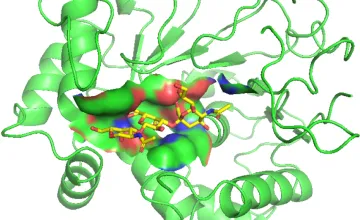
The advancement lays the groundwork for creating a library of sugar-recognizing proteins that may help detect and treat diverse illnesses.
The olfactory senses of ants help them hunt, detect outsiders, and know their role within a colony. In a new study, researchers have discovered how ants can switch one gene on out of hundreds to ensure their survival.
Explore More: University Research
You can filter stories by the university.
A pioneering study conducted by Johns Hopkins University engineers assessed the vulnerability of U.S. bridges to large ship collisions, following the collapse of the Key Bridge in Baltimore. The research team analyzed six years of U.S. Coast Guard data to determine which bridges experience the most traffic from large ships.
New research reveals hurricanes and tropical storms in the United States cause a surge of deaths for nearly 15 years after a storm hits.
A new study from Arizona State University (ASU) reveals that human recreational activities, such as tubing and swimming, are significantly contributing to microplastic pollution.
A Princeton-led research team, including over 280 scientists from 122 institutions, has mapped the full connectome—neuron-by-neuron and synapse-by-synapse—of an adult fruit fly brain.
Indiana University School of Medicine researchers have made a significant breakthrough in developing a new gene therapy approach that restores full-length dystrophin protein, which could lead to new treatments for people with Duchenne muscular dystrophy (DMD).