
AAU universities conduct a majority of the federally funded university research that contributes to our economic competitiveness, health and well-being, and national security. AAU universities are growing our economy through invention and innovation while preparing the next generation of scientists and engineers for global leadership. By moving research into the marketplace AAU universities are helping to create jobs, and provide society with new medicines and technologies.
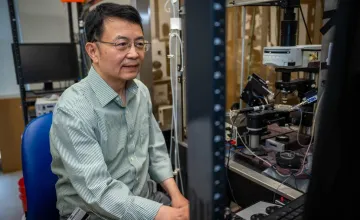
A study by researchers at Duke University School of Medicine found that supplying healthy mitochrondra to damaged nerve cells can signifantly help millions managing pain from diabetic neuropathy and chemotherapy.

Researchers from the USF College of Marine Science are studying soft tissue samples from barnacles, oysters, and fish to better understand the state of contamination and its origins in Tampa Bay, Florida's largest estuary.
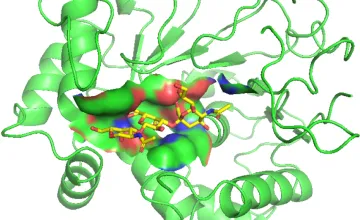
The advancement lays the groundwork for creating a library of sugar-recognizing proteins that may help detect and treat diverse illnesses.
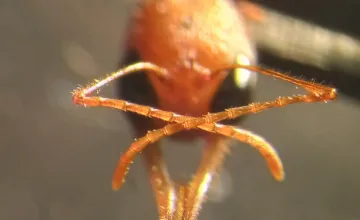
The olfactory senses of ants help them hunt, detect outsiders, and know their role within a colony. In a new study, researchers have discovered how ants can switch one gene on out of hundreds to ensure their survival.
Explore More: University Research
You can filter stories by the university.
An international team of researchers used an X-ray laser at the Department of Energy’s SLAC National Accelerator Laboratory to create the first detailed maps of two melatonin receptors that tell our bodies when to go to sleep or wake up, and guide other biological processes
Stanford University | The University of North Carolina at Chapel Hill | University at Buffalo - The State University of New York | University of Southern California | University Research
A study by Stanford researchers employed state-of-the-art visualization techniques to reveal how Helicobacter pylori, a potentially pathogenic bacterial species that infects half the people on Earth, establishes its niche in the stomach.
Men who delay starting a family have a ticking “biological clock” — just like women — that may affect the health of their partners and children, according to Rutgers researchers.
Rice University physicists help discover evidence that xenon isotope’s half-life tops all so far.
Case Western Reserve researchers boast 98 percent accuracy for robots recognizing facial cues; could improve video gaming today, health care tomorrow.