
AAU universities conduct a majority of the federally funded university research that contributes to our economic competitiveness, health and well-being, and national security. AAU universities are growing our economy through invention and innovation while preparing the next generation of scientists and engineers for global leadership. By moving research into the marketplace AAU universities are helping to create jobs, and provide society with new medicines and technologies.
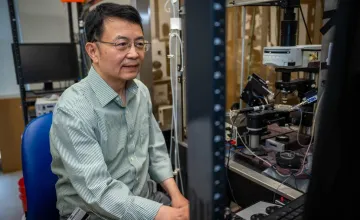
A study by researchers at Duke University School of Medicine found that supplying healthy mitochrondra to damaged nerve cells can signifantly help millions managing pain from diabetic neuropathy and chemotherapy.

Researchers from the USF College of Marine Science are studying soft tissue samples from barnacles, oysters, and fish to better understand the state of contamination and its origins in Tampa Bay, Florida's largest estuary.
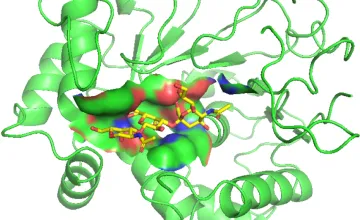
The advancement lays the groundwork for creating a library of sugar-recognizing proteins that may help detect and treat diverse illnesses.

The olfactory senses of ants help them hunt, detect outsiders, and know their role within a colony. In a new study, researchers have discovered how ants can switch one gene on out of hundreds to ensure their survival.
Explore More: University Research
You can filter stories by the university.
Some breast cancers return decades later. Now, a researcher at Stanford University, joined by collaborators at several other institutions, has subcategorized tumors to predict recurrence, guide treatment decisions and improve drug development.
Stanford University scientists were able to engineer immune cells known as macrophages to detect and flag cancer in mice. The researchers hope the technique can be used for early cancer diagnostics in humans.
Stanford University researchers have found a way to predict who will suffer heart problems from a common breast-cancer drug, as well as identified an FDA-approved medication that could mitigate those side effects.
Telomerase reverse transcriptase (TERT), an enzyme associated with nearly all malignant human cancers, is even more diverse and unconventional than previously realized, new CU Boulder research finds.
A new study at the University of Southern California shows mental health-related emergency department visits have increased substantially since 2009, a trend driven by large increases in adolescent and young adult visits to the emergency room for behavioral health-related diagnoses.