
AAU universities conduct a majority of the federally funded university research that contributes to our economic competitiveness, health and well-being, and national security. AAU universities are growing our economy through invention and innovation while preparing the next generation of scientists and engineers for global leadership. By moving research into the marketplace AAU universities are helping to create jobs, and provide society with new medicines and technologies.
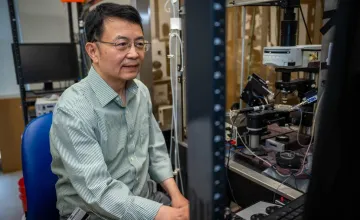
A study by researchers at Duke University School of Medicine found that supplying healthy mitochrondra to damaged nerve cells can signifantly help millions managing pain from diabetic neuropathy and chemotherapy.

Researchers from the USF College of Marine Science are studying soft tissue samples from barnacles, oysters, and fish to better understand the state of contamination and its origins in Tampa Bay, Florida's largest estuary.
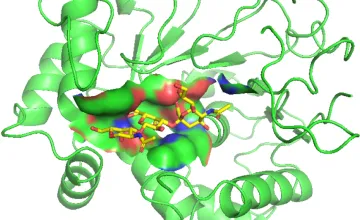
The advancement lays the groundwork for creating a library of sugar-recognizing proteins that may help detect and treat diverse illnesses.
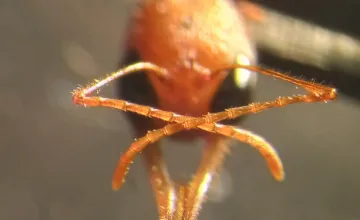
The olfactory senses of ants help them hunt, detect outsiders, and know their role within a colony. In a new study, researchers have discovered how ants can switch one gene on out of hundreds to ensure their survival.
Explore More: University Research
You can filter stories by the university.
Now researchers at The Ohio State University are working on a testing system that would require a simple exhaled breath. Perena Gouma is the primary investigator of a team developing a breathalyzer device that will sample breath for key biomarkers of the infection.
Stony Brook University researchers have developed programs and strategies for families with children who have ASD to cope and adjust during the pandemic and in anticipation of how life will change in its aftermath.
Stony Brook University researchers have launched more than 180 Covid-19 related studies in order to battle the virus and examine circumstances where it has or will change our societal landscape
College of Nursing teams with Trusted Health to address burnout, mental health issues
The National Science Foundation recently awarded three Rapid Response Research, or RAPID, grants — grants given by the NSF for research focusing on urgent or immediate situations — to Michigan State University researchers for work regarding COVID-19.