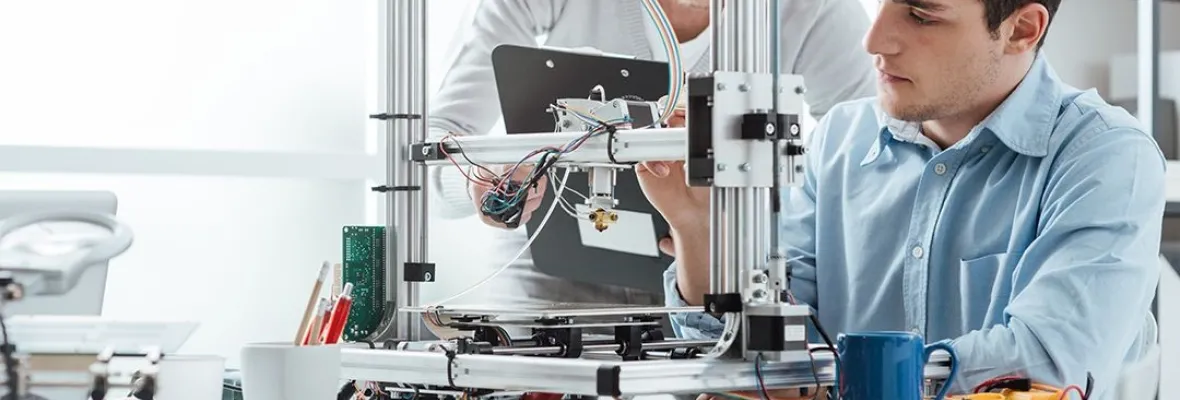
AAU universities conduct a majority of the federally funded university research that contributes to our economic competitiveness, health and well-being, and national security. AAU universities are growing our economy through invention and innovation while preparing the next generation of scientists and engineers for global leadership. By moving research into the marketplace AAU universities are helping to create jobs, and provide society with new medicines and technologies.
A study by researchers at Duke University School of Medicine found that supplying healthy mitochrondra to damaged nerve cells can signifantly help millions managing pain from diabetic neuropathy and chemotherapy.

Researchers from the USF College of Marine Science are studying soft tissue samples from barnacles, oysters, and fish to better understand the state of contamination and its origins in Tampa Bay, Florida's largest estuary.
The advancement lays the groundwork for creating a library of sugar-recognizing proteins that may help detect and treat diverse illnesses.
The olfactory senses of ants help them hunt, detect outsiders, and know their role within a colony. In a new study, researchers have discovered how ants can switch one gene on out of hundreds to ensure their survival.
Explore More: University Research
You can filter stories by the university.
The University of Illinois Urbana-Champaign will shift on-campus COVID-19 testing to make the processing of results even faster.
A new model for predicting COVID-19's impact using artificial intelligence (AI) dramatically outperforms other models, so much so that it has attracted the interest of public health officials across the country.
CU Boulder Today spoke with Kevin J. Krizek, professor of transport in the programs of Environmental Design and Environmental Studies, to get some answers about the future of our transportation system.
The Grainger College of Engineering at the University of Illinois at Urbana-Champaign has completed the prototype for a mobile laboratory, called mobileSHIELD, designed to demonstrate a way to rapidly deploy I-COVID, the saliva-based test for COVID-19 developed at Illinois.
A new study coordinated by CU Boulder makes clear the extraordinary speed and scale of increases in energy use, economic productivity and global population that have pushed the Earth towards a new geological epoch, known as the Anthropocene. Distinct physical, chemical and biological changes to Earth’s rock layers began around the year 1950, the research found.