
AAU universities conduct a majority of the federally funded university research that contributes to our economic competitiveness, health and well-being, and national security. AAU universities are growing our economy through invention and innovation while preparing the next generation of scientists and engineers for global leadership. By moving research into the marketplace AAU universities are helping to create jobs, and provide society with new medicines and technologies.
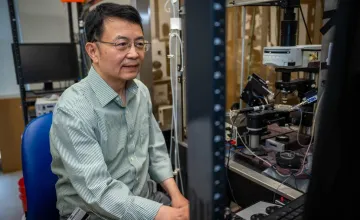
A study by researchers at Duke University School of Medicine found that supplying healthy mitochrondra to damaged nerve cells can signifantly help millions managing pain from diabetic neuropathy and chemotherapy.

Researchers from the USF College of Marine Science are studying soft tissue samples from barnacles, oysters, and fish to better understand the state of contamination and its origins in Tampa Bay, Florida's largest estuary.
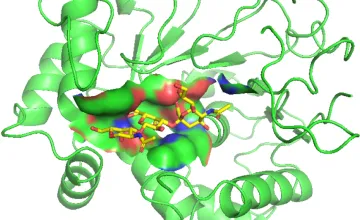
The advancement lays the groundwork for creating a library of sugar-recognizing proteins that may help detect and treat diverse illnesses.

The olfactory senses of ants help them hunt, detect outsiders, and know their role within a colony. In a new study, researchers have discovered how ants can switch one gene on out of hundreds to ensure their survival.
Explore More: University Research
You can filter stories by the university.
New research led by scientists at the University of Washington indicates that mosquitoes — after detecting a telltale gas that we exhale — fly toward specific colors, including red, orange, black and cyan.
A new discovery could help scientists to understand “strange metals,” a class of materials that are related to high-temperature superconductors and share fundamental quantum attributes with black holes.
A prestigious Faculty Early Career Development (CAREER) Program award from the National Science Foundation will enable a researcher from the University of Kansas School of Engineering to investigate how to boost effectiveness of security operations centers (SOCs) — centralized facilities that deal with security issues and protect enterprise computer networks for private industry, academic institutions and government organizations.
Exposure to phthalates — a group of chemicals found in everything from plastics to personal care products to electronics—may disrupt an important hormone needed to sustain a healthy pregnancy, according to a Rutgers study.
A tunable, atomically thin materials platform may help researchers figure out how to create a robust quantum condensate that can flow without dissipation of energy — potentially paving the way for ultra-efficient lossless electronic devices.