
AAU universities conduct a majority of the federally funded university research that contributes to our economic competitiveness, health and well-being, and national security. AAU universities are growing our economy through invention and innovation while preparing the next generation of scientists and engineers for global leadership. By moving research into the marketplace AAU universities are helping to create jobs, and provide society with new medicines and technologies.

A study by researchers at Duke University School of Medicine found that supplying healthy mitochrondra to damaged nerve cells can signifantly help millions managing pain from diabetic neuropathy and chemotherapy.

Researchers from the USF College of Marine Science are studying soft tissue samples from barnacles, oysters, and fish to better understand the state of contamination and its origins in Tampa Bay, Florida's largest estuary.
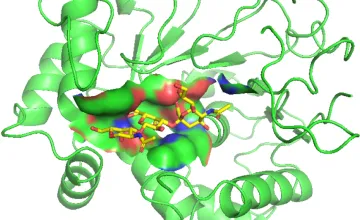
The advancement lays the groundwork for creating a library of sugar-recognizing proteins that may help detect and treat diverse illnesses.
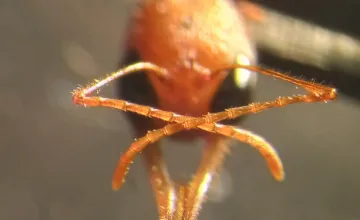
The olfactory senses of ants help them hunt, detect outsiders, and know their role within a colony. In a new study, researchers have discovered how ants can switch one gene on out of hundreds to ensure their survival.
Explore More: University Research
You can filter stories by the university.
The University of California San Diego has joined a Phase II clinical trial to evaluate various additional COVID-19 booster shots. The trial seeks to understand if different vaccine regimens can broaden immune responses in adults who already have received a primary vaccination series and a first booster shot.
Confronting COVID-19 | Emory University | University of California San Diego | University of Rochester | University Research
A team of Brown University students and faculty has developed a new tool to help researchers better understand the movements of microorganisms.
New research from University of Kansas is the most thorough examination ever produced of the evolutionary history and anatomical variation of archerfishes.
A recent study led by Stony Brook University researchers suggests that human migration due to droughts will increase by at least 200 percent as we move through the 21st century.
Researchers at BU's National Emerging Infectious Diseases Laboratories are using the Aedes aegypti mosquitoes to study diseases like dengue, West Nile, and Zika in an insectary.