
AAU universities conduct a majority of the federally funded university research that contributes to our economic competitiveness, health and well-being, and national security. AAU universities are growing our economy through invention and innovation while preparing the next generation of scientists and engineers for global leadership. By moving research into the marketplace AAU universities are helping to create jobs, and provide society with new medicines and technologies.
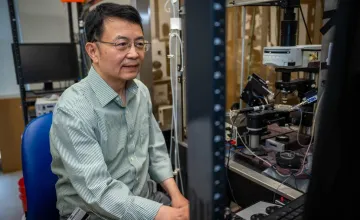
A study by researchers at Duke University School of Medicine found that supplying healthy mitochrondra to damaged nerve cells can signifantly help millions managing pain from diabetic neuropathy and chemotherapy.

Researchers from the USF College of Marine Science are studying soft tissue samples from barnacles, oysters, and fish to better understand the state of contamination and its origins in Tampa Bay, Florida's largest estuary.
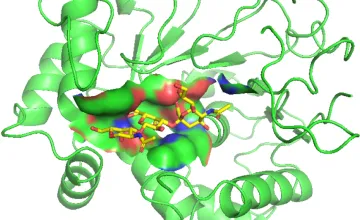
The advancement lays the groundwork for creating a library of sugar-recognizing proteins that may help detect and treat diverse illnesses.
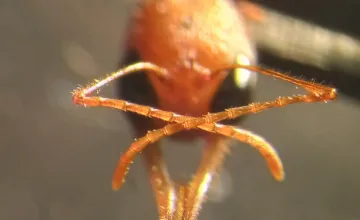
The olfactory senses of ants help them hunt, detect outsiders, and know their role within a colony. In a new study, researchers have discovered how ants can switch one gene on out of hundreds to ensure their survival.
Explore More: University Research
You can filter stories by the university.
Yale researchers recently published a study suggesting that a surge of RSV infections began in the Netherlands last summer and has lingered in the country ever since.
Researchers at Carnegie Mellon University have recently demonstrated advances in the integration of perception and action that would allow automakers such as Ford Motor Company and others to improve their production process using robots with greater flexibility and capability than ever before.
A dissolvable patch that uses antibodies grown from tobacco plants could prevent unwanted pregnancies and HIV—at a time when reproductive health is under attack
Researchers at the University of California, Irvine have discovered that removal of cilia from the brain’s striatum region impaired time perception and judgment, revealing possible new therapeutic targets for mental and neurological conditions including schizophrenia, Parkinson’s and Huntington’s diseases, autism spectrum disorder, and Tourette syndrome.
The $15 million National Science Foundation program, I-Corps, will foster innovation and accelerate economic development in Western New York, and is a partnership with UB, Dartmouth, Cornell, University of Rochester, University of Pittsburgh, and others.
Cornell University | Dartmouth | University at Buffalo - The State University of New York | University of Pittsburgh | University of Rochester | University Research