
AAU universities conduct a majority of the federally funded university research that contributes to our economic competitiveness, health and well-being, and national security. AAU universities are growing our economy through invention and innovation while preparing the next generation of scientists and engineers for global leadership. By moving research into the marketplace AAU universities are helping to create jobs, and provide society with new medicines and technologies.
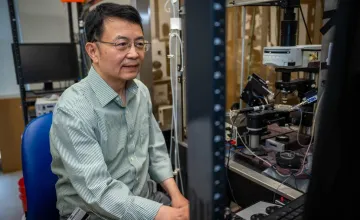
A study by researchers at Duke University School of Medicine found that supplying healthy mitochrondra to damaged nerve cells can signifantly help millions managing pain from diabetic neuropathy and chemotherapy.

Researchers from the USF College of Marine Science are studying soft tissue samples from barnacles, oysters, and fish to better understand the state of contamination and its origins in Tampa Bay, Florida's largest estuary.
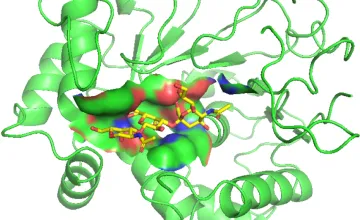
The advancement lays the groundwork for creating a library of sugar-recognizing proteins that may help detect and treat diverse illnesses.
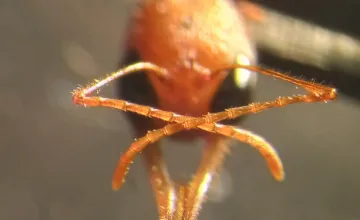
The olfactory senses of ants help them hunt, detect outsiders, and know their role within a colony. In a new study, researchers have discovered how ants can switch one gene on out of hundreds to ensure their survival.
Explore More: University Research
You can filter stories by the university.
One in three adults in the United States hold this “news finds me” (NFM) mentality, which could lead to less political knowledge, less interest in politics and greater political cynicism, according to Penn State researchers.
Having more women in agriculture is associated with greater community well-being, according to researchers at Penn State and the University of Wisconsin-Madison.
A metal-free magnetic gel created by University of Michigan researchers could soon control "soft robots," medical devices, implants, and advanced drug delivery methods using magnetism.
An international team of researchers including Northwestern University astrophysicists are hoping that upcoming images from NASA’s Nancy Grace Roman Space Telescope may hold vital clues to understanding dark matter.
The Dark Energy Survey reveals new insights! With over 1,500 supernovae analyzed using machine learning, findings strengthen our cosmological model but hint at the complex nature of dark energy.