
AAU universities conduct a majority of the federally funded university research that contributes to our economic competitiveness, health and well-being, and national security. AAU universities are growing our economy through invention and innovation while preparing the next generation of scientists and engineers for global leadership. By moving research into the marketplace AAU universities are helping to create jobs, and provide society with new medicines and technologies.
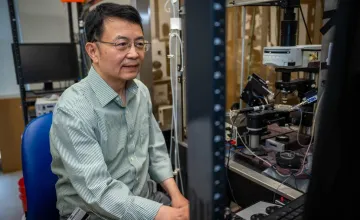
A study by researchers at Duke University School of Medicine found that supplying healthy mitochrondra to damaged nerve cells can signifantly help millions managing pain from diabetic neuropathy and chemotherapy.

Researchers from the USF College of Marine Science are studying soft tissue samples from barnacles, oysters, and fish to better understand the state of contamination and its origins in Tampa Bay, Florida's largest estuary.
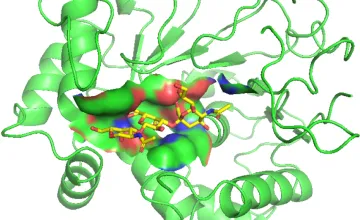
The advancement lays the groundwork for creating a library of sugar-recognizing proteins that may help detect and treat diverse illnesses.
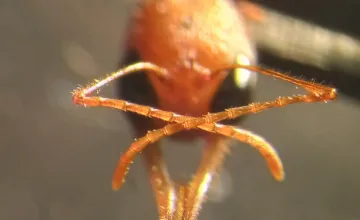
The olfactory senses of ants help them hunt, detect outsiders, and know their role within a colony. In a new study, researchers have discovered how ants can switch one gene on out of hundreds to ensure their survival.
Explore More: University Research
You can filter stories by the university.
Researchers from USF studied 144 nurses over two weeks to see how well they could stay focused on the present and how often they fixated on negative thoughts.
A new study led by a Brown researcher reveals the frequency of meteoroids pummeling Mars is higher than previously estimated and detects two of the largest impacts ever seen by scientists on the Red Planet.
New research from environmental engineers at Duke University has shown that citizen science tools like weather apps used to gauge heat in urban areas likely understate the problem of heat islands.
A University at Buffalo researcher’s analysis of 55 years of statements made by the perpetrators of mass shootings demonstrates that shooters’ grievances are classifiable and can be mapped onto existing communication theory in ways that suggest a degree of predictability, explanation and control.
A team of international researchers led by NYU has uncovered a biological explanation for long-term memories. It centers on the discovery of the role of a molecule, KIBRA, that serves as a “glue” to other molecules, thereby solidifying memory formation.