
AAU universities conduct a majority of the federally funded university research that contributes to our economic competitiveness, health and well-being, and national security. AAU universities are growing our economy through invention and innovation while preparing the next generation of scientists and engineers for global leadership. By moving research into the marketplace AAU universities are helping to create jobs, and provide society with new medicines and technologies.
A study by researchers at Duke University School of Medicine found that supplying healthy mitochrondra to damaged nerve cells can signifantly help millions managing pain from diabetic neuropathy and chemotherapy.
Researchers from the USF College of Marine Science are studying soft tissue samples from barnacles, oysters, and fish to better understand the state of contamination and its origins in Tampa Bay, Florida's largest estuary.
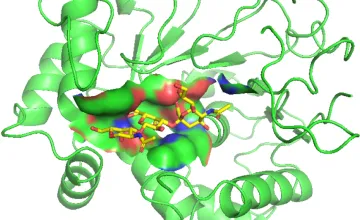
The advancement lays the groundwork for creating a library of sugar-recognizing proteins that may help detect and treat diverse illnesses.
The olfactory senses of ants help them hunt, detect outsiders, and know their role within a colony. In a new study, researchers have discovered how ants can switch one gene on out of hundreds to ensure their survival.
Explore More: University Research
You can filter stories by the university.
As her doctors told Paula Moreland how they were proposing to treat her seizures, her eyes grew wide. Moreland's mother, who was with her at the appointment, said, "Just listen to them, babe."
Researchers from the Iowa Geological Survey, housed at the University of Iowa, have created a comprehensive nutrient runoff mitigation guide to reduce the overabundance of choice farmers can face in approaching nitrate and phosphate nutrient reduction.
Cornell and NASA researchers paint a bleak picture for the Southwest and much of America’s breadbasket, the Great Plains. A “megadrought” likely will occur late in this century, and it could last for three decades.
Neurologist Ann McKee talks about battered brains, tangled tau, and the future of sports
The Kansas Geological Survey and the Kansas Department of Agriculture conducted a study in 2015 to measure groundwater levels in over 1,400 water wells.