
AAU universities conduct a majority of the federally funded university research that contributes to our economic competitiveness, health and well-being, and national security. AAU universities are growing our economy through invention and innovation while preparing the next generation of scientists and engineers for global leadership. By moving research into the marketplace AAU universities are helping to create jobs, and provide society with new medicines and technologies.
A study by researchers at Duke University School of Medicine found that supplying healthy mitochrondra to damaged nerve cells can signifantly help millions managing pain from diabetic neuropathy and chemotherapy.

Researchers from the USF College of Marine Science are studying soft tissue samples from barnacles, oysters, and fish to better understand the state of contamination and its origins in Tampa Bay, Florida's largest estuary.
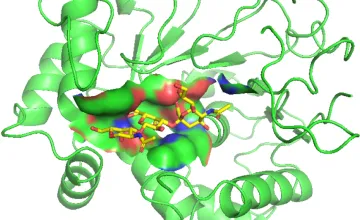
The advancement lays the groundwork for creating a library of sugar-recognizing proteins that may help detect and treat diverse illnesses.

The olfactory senses of ants help them hunt, detect outsiders, and know their role within a colony. In a new study, researchers have discovered how ants can switch one gene on out of hundreds to ensure their survival.
Explore More: University Research
You can filter stories by the university.
Florida researcher reduces space and reorganizes how crops are laid-out in method he calls “compact bed geometry” and grows same amount of vegetables with same amount of water, less loss of fertilizers and less need for pesticides.
For the second year, the University is hosting a cybersecurity camp for high school students through a program sponsored by the National Security Agency and the National Science Foundation.
Researchers from the College of Food, Agricultural, and Environmental Sciences at Ohio State University train thousands of Ohio farmers how to keep nutrient runoff from fertilizers, especially phosphorus, out of Ohio’s waters.
Applying mild electrical stimulation to an area of the brain associated with cognitive control helps people with schizophrenia to recognize errors and adjust their behavior to avoid them as much as it helps healthy subjects do so, according to a new study by Vanderbilt psychologists.
In recent months, government officials in the United States, the United Kingdom, and other countries have made repeated calls for law-enforcement agencies to be able to access, upon due authorization, encrypted data to help them solve crimes.